Efficiently unpacking after a move begins with prioritizing essential boxes and setting up the bathroom and bedrooms first to ensure immediate comfort. Homeowners should then proceed to the kitchen and common areas; this strategy helps maintain organization and reduces the stress of settling into a new space.
The moving truck has finally departed, leaving you standing in a labyrinth of cardboard boxes and packing tape. While the physical relocation is complete, the true transition to your new Chicago home has only just begun. The exhaustion of moving day often leads to a disorganized unpacking process, which can prolong your transition for weeks. Settling in quickly requires a calculated strategy that prioritizes functionality over mere aesthetics. In this guide, we provide an expert roadmap to streamline your recovery. You will learn how to assemble a first night survival kit, establish an efficient room by room order, and manage the inevitable influx of packing waste. Whether you are navigating a compact downtown apartment or a spacious suburban residence, these professional tactics will transform your new house into a functioning home in record time.
The First Night Survival Kit: What to Unpack First When Moving
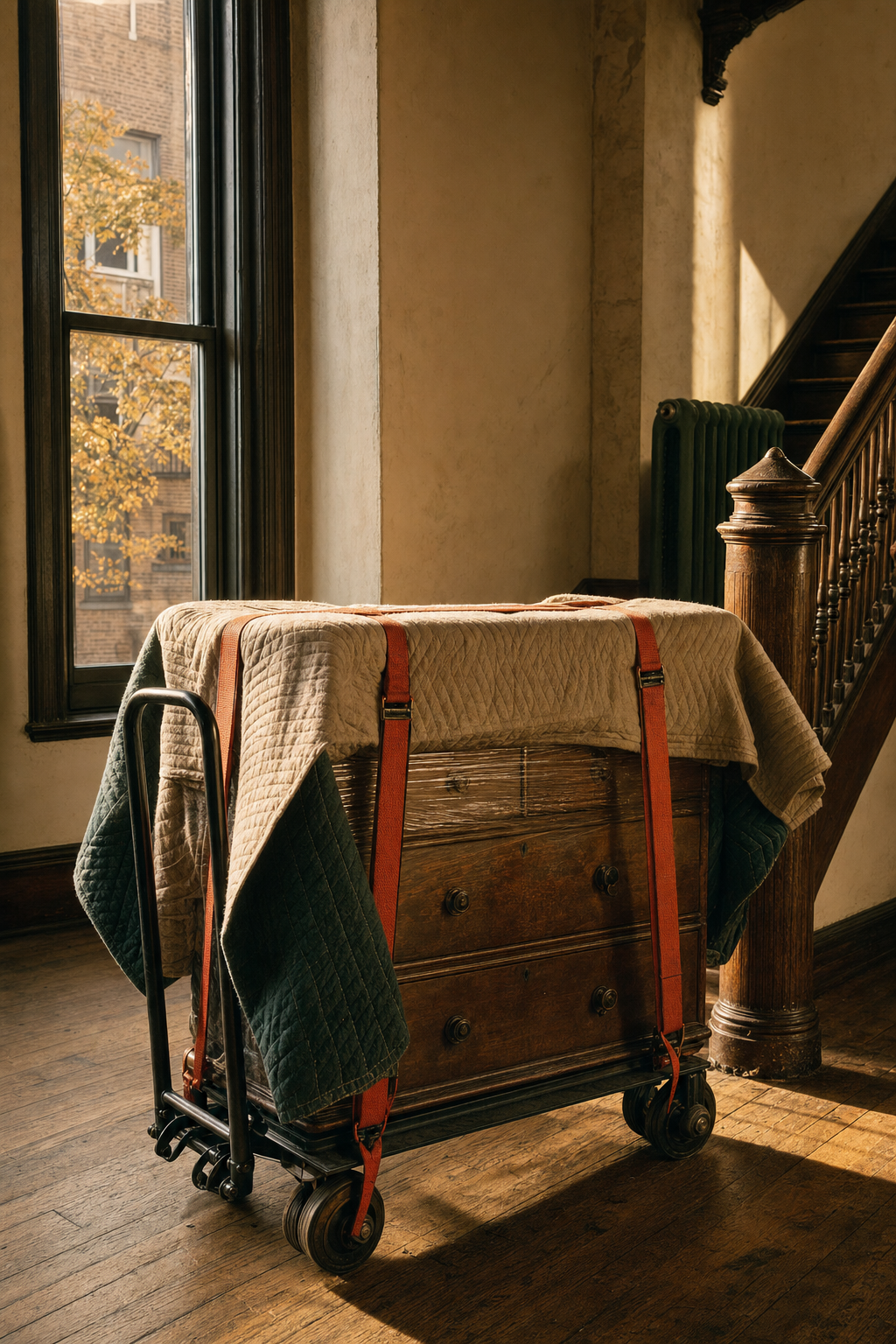
The secret to successful unpacking after a move is recognizing that you cannot do everything at once. Focus instead on the two pillars of the first 24 hours: hygiene and sleep. By prioritizing the bathroom and the bedroom immediately, you ensure that your body can recover from the physical demands of the day.
Start by setting up the bathroom. You will want a shower curtain, towels, soap, and toilet paper accessible the moment you walk through the door. A hot shower is the most effective way to reset your mindset after a long day of logistics. Following this, turn your attention to the bedroom. Do not worry about organizing the closet or hanging curtains yet; simply get the mattress in place and put on clean bedding. Having a single change of clothes ready prevents you from digging through multiple taped boxes when you are most tired.
In our city, professional residential transitions across Chicago require a localized approach. A Chicago Essentials kit is vital for a smooth transition. Ensure you have a clear, unobstructed path to the thermostat. Whether the city is facing a January deep freeze or a humid July afternoon, regulating the temperature of your new home is a top priority. Keep a menu for a local pizza place or a neighborhood diner nearby. After managing the heavy lifting, the last thing you should worry about is finding a fork or preheating an oven. These small preparations allow you to enjoy your new space immediately, supported by dedicated moving services that handle the heavy lifting while you focus on these high-priority comforts.
How Long Does It Take to Unpack After Moving into a New Home?
Once the immediate needs of the first night are met, the timeline for the remaining boxes depends on your square footage and strategy. For a standard one-bedroom apartment in Lakeview, expect two to three days of focused effort to reach a functional baseline. A larger single-family home in the suburbs typically requires two weeks to fully transition from boxes to a finished home.
We categorize this timeline into two distinct phases. Active Unpacking involves the physical act of removing items from boxes and placing them on accessible surfaces; this should be the priority during the first few days. The second phase, Settling In, involves the nuances of organization, such as arranging bookshelves, hanging art, and fine-tuning closet layouts. This secondary phase often stretches out as you live in the space and discover your new routines.
Efficiency during the move-in phase is the greatest variable in this timeline. Our approach to residential transitions across Chicago focuses on precise room placement and clear labeling during the unloading process. When boxes are delivered directly to their final destination rather than stacked in a central living area, you bypass the labor of relocating heavy items yourself. This professional organization sets the stage for a significantly faster unpack, allowing you to move from the active phase to the settling phase with far less physical strain.
Strategic Room by Room Unpacking Order

After the bedroom and bathroom are functional, the focus shifts to a systematic approach that balances immediate utility with long-term organization. The kitchen serves as the primary Phase 2 objective. While it is the most complex room to organize due to the high volume of fragile items and small appliances, tackling it early is a financial necessity. Relying on the city’s delivery services for every meal quickly becomes an unsustainable expense during residential transitions across Chicago. Prioritizing the kitchen allows you to establish a routine, manage your budget, and feel a sense of normalcy in the new space far sooner than if you focused on leisure areas.
The living room, by contrast, should remain lower on your priority list. While a television and a sofa are central to relaxation, they do not facilitate the essential functions of the household. It is common for living room boxes to remain sealed for several days while more critical areas reach completion. This delay does not hinder your daily life in the same way a missing coffee maker or a lack of clean plates would. Focus your energy on the rooms that generate the highest daily utility first.
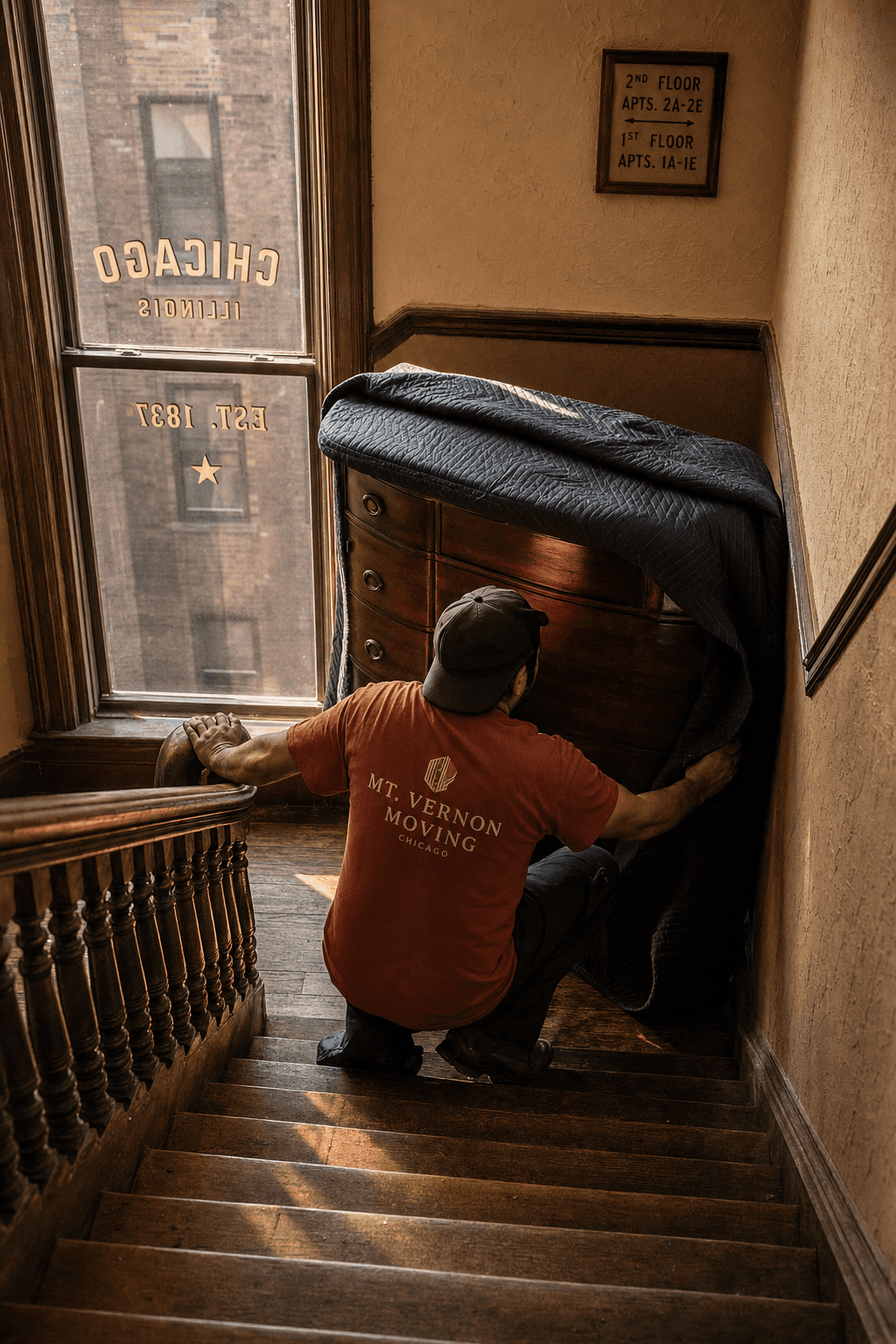
In Chicago high-rise environments, the order of operations is also dictated by space and safety regulations. Building management in the Loop or River North often enforces strict rules regarding hallway obstructions. You must prioritize clearing boxes from entryways and narrow corridors immediately. This is not just about aesthetics; it is a vital safety measure to ensure clear paths for egress. By utilizing dedicated moving services to stage boxes within the interior of rooms rather than in transit zones, you maintain compliance with building codes and keep the process orderly. A structured flow ensures that high-traffic areas remain clear, allowing you to focus on the intricate task of unpacking after a move without creating a hazardous environment.
Conquering the Kitchen: From Boxes to Home Cooked Meals
Transitioning from clearing entryways to organizing the kitchen requires a shift from macro-logistics to micro-efficiency. The kitchen is often the most daunting room due to its density, so you should manage the chaos with a "Small Wins" strategy. Unpack your coffee maker, a few plates, and basic cutlery immediately. Having these items accessible allows you to function like a resident rather than a guest, even if the rest of the room is still filled with cardboard.
Apply a "Shelf Logic" approach to organize the space for long-term utility. Place high-frequency items, such as drinking glasses and everyday bowls, on the middle shelves at eye level. This minimizes reach and strain during your daily routine. Heavy pots and pans should occupy lower cabinets near the stove for easy access. Conversely, reserve the highest, hardest to reach shelves for seasonal items like holiday platters or specialized appliances that only see occasional use.
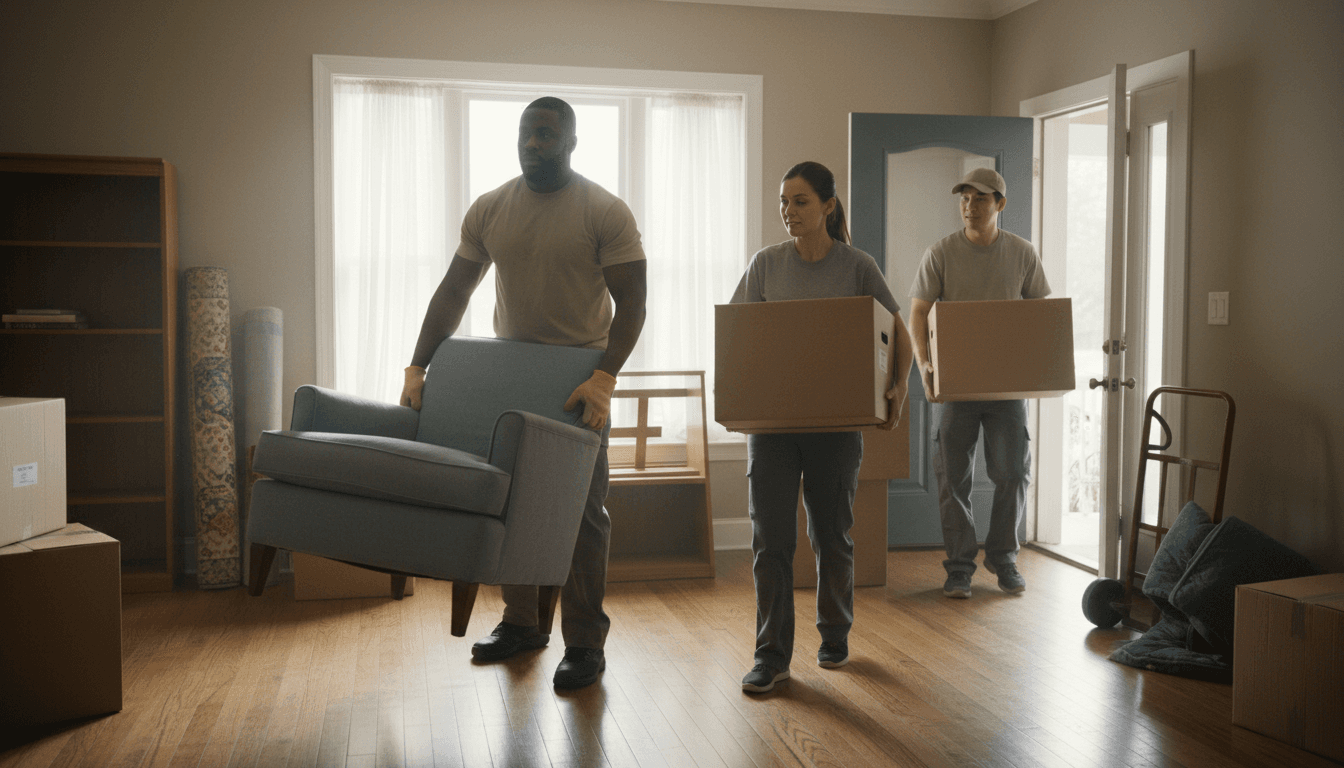
If your dedicated moving services team has already staged the boxes within the kitchen area, you can focus purely on placement rather than heavy lifting. This method prevents the fatigue often associated with unpacking after a move by breaking a large project into logical, manageable tiers. By establishing a functional kitchen early, you solidify the foundation for successful residential transitions across Chicago, turning a new apartment into a home where meals can be prepared and enjoyed.
Dealing with Chicago Moving Waste: Boxes and Packing Paper
Once your kitchen is functional, the physical evidence of your transition likely fills your hallway in the form of towering cardboard stacks. Managing waste is a critical part of unpacking after a move, especially within the constraints of Chicago's infrastructure. The city's Blue Cart recycling program has strict requirements; all cardboard must be completely flattened and placed inside the bin. Leaving loose, upright boxes in narrow city alleys creates hazards for sanitation trucks and neighbors alike. If your boxes do not fit inside the cart with the lid closed, crews may skip your pickup to avoid littering the alley.
For those coordinating residential transitions across Chicago, sustainability often involves looking beyond the blue bin. Neighborhoods like Logan Square and Wicker Park have highly active "Buy Nothing" community groups where residents frequently exchange moving supplies. Posting your clean boxes and packing paper on these platforms allows another neighbor to reuse them, which reduces the strain on municipal recycling centers. If you prefer a direct drop-off, the Chicago Sustainable Manufacturing Center or local recycling drop-off centers accept bulk cardboard. This proactive approach keeps the neighborhood clean and ensures your focus remains on your new home rather than managing a mounting pile of debris. Using dedicated moving services to stage your boxes efficiently makes this final cleanup phase significantly faster.
When to Hire Help Unpacking After a Move
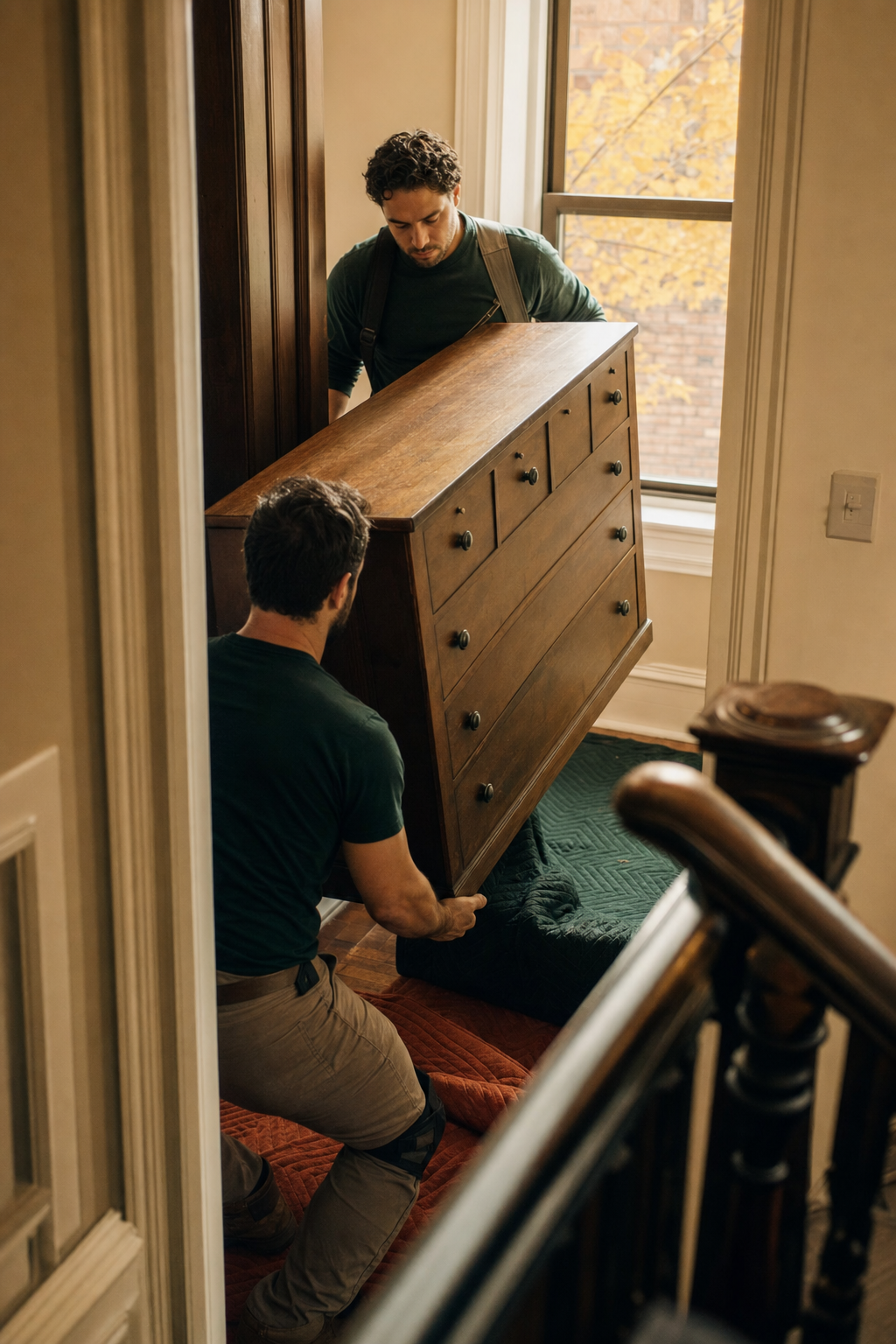
Managing the logistical tail end of a relocation often reveals a significant gap between having boxes in the correct rooms and actually being settled. For many residents, especially busy professionals in the Loop or families managing school schedules in the suburbs, hiring professional unpacking labor is a calculated time management strategy rather than a simple luxury. The opportunity cost of spending multiple weekends sorting through cardboard often outweighs the expense of bringing in specialized help to finalize the process.
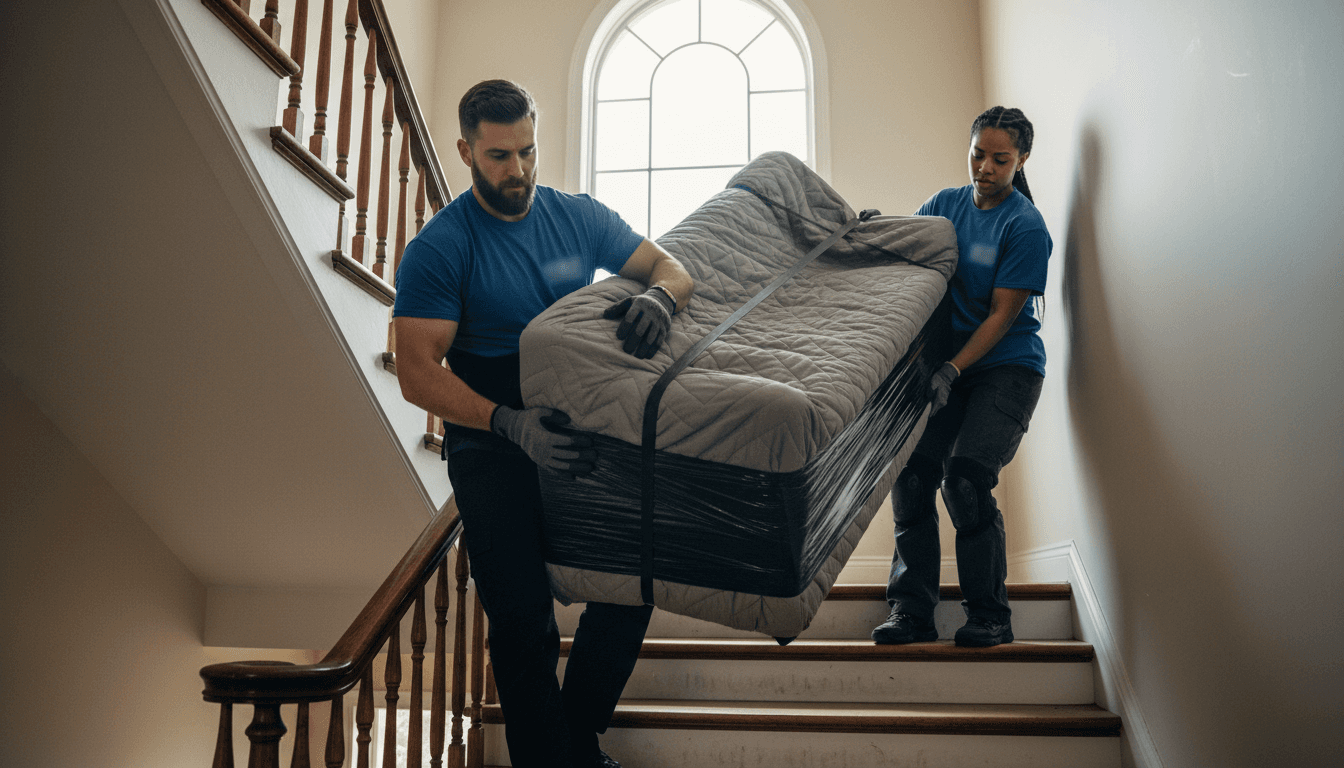
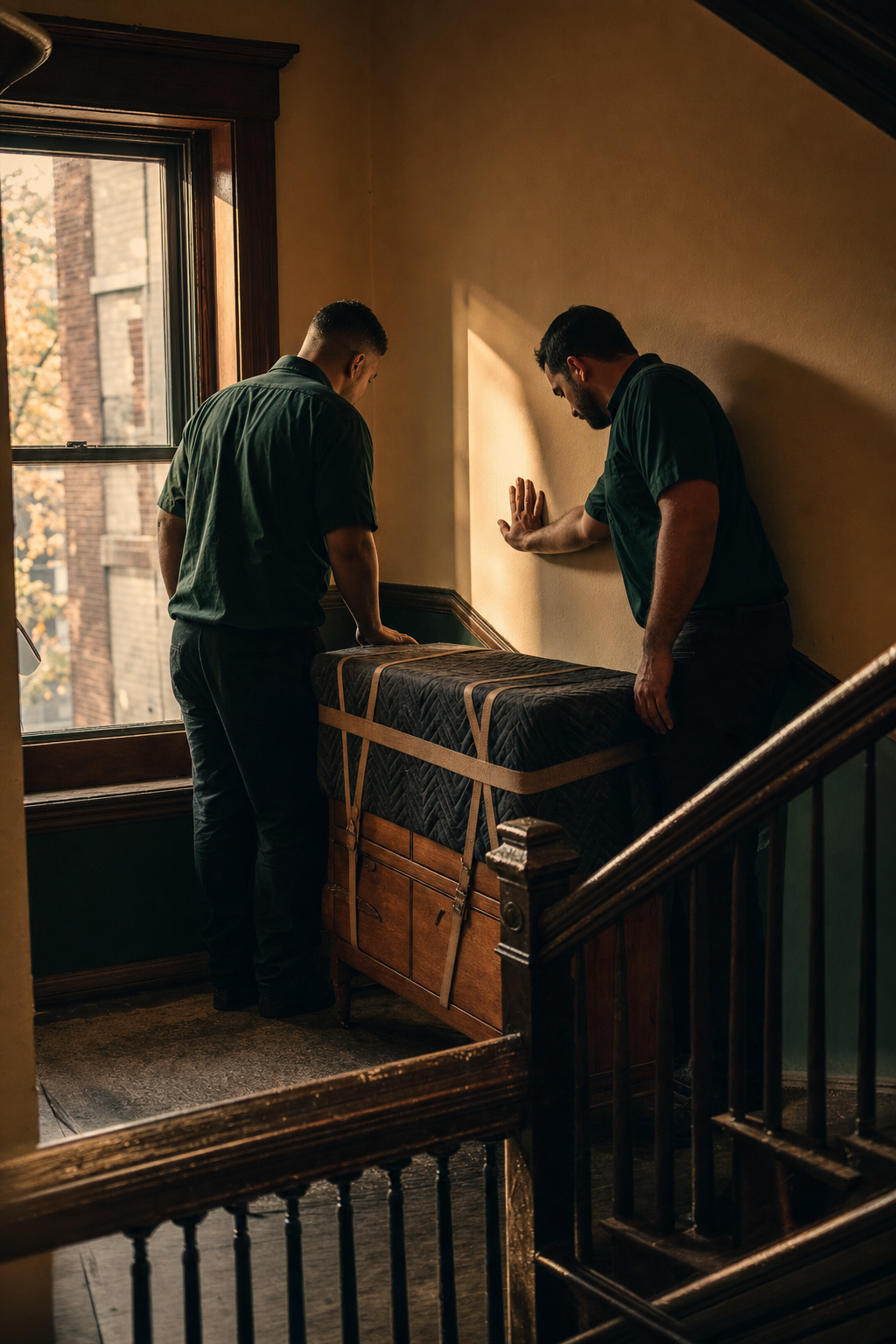
A "Hybrid Approach" provides the most efficiency for complex residential transitions across Chicago. In this model, the moving company focuses on the high-intensity logistics: protecting the home, maneuvering heavy furniture into precise positions, and ensuring all boxes reach their designated rooms. Once the physical move is complete, professional organizers or additional labor teams take over the granular task of emptying boxes and systemizing storage.
Approach | Focus | Primary Benefit |
|---|---|---|
Professional Movers | Furniture placement, safety, heavy lifting | Prevents physical strain and property damage |
Unpacking Labor | Box contents, shelf organization, color coding | Immediate functionality and reduced stress |
The Hybrid Method | End-to-end efficiency from truck to shelf | Fastest transition to a normal routine |
Our role at Velox Movers is to provide the expert foundation for this transition. By delivering dedicated moving services that emphasize precision and room-specific staging, we remove the physical obstacles of unpacking after a move. This allows you to focus your energy on the organizational details that make a house feel like a home; ensuring the final phase of your move is as seamless as the first.
Strategies for Unpacking Quickly in a Small Space
Managing a move into a vintage Lakeview walk-up or a West Loop studio requires a disciplined approach to square footage. In these compact environments, the most effective strategies for unpacking involve a "one-in, one-out" methodology. Open only one box at a time. By emptying a single container and immediately breaking it down, you preserve the limited floor space needed to move around. Spreading contents from multiple boxes across a small room quickly leads to logistical gridlock.
Prioritize vertical storage from the first hour. In small footprints, every inch of wall space is functional real estate. Get books onto shelves and kitchen gadgets into upper cabinets immediately to clear your line of sight. Finally, be ruthless about items that no longer fit. If a side table creates a bottleneck in your new layout, it is better to rehome it than to let it obstruct your path. These residential transitions across Chicago are most successful when you prioritize flow over sentimentality. Utilizing dedicated moving services for precise box staging allows you to execute these strategies for unpacking without the physical exhaustion of shuffling heavy containers in a tight space. This focus ensures unpacking after a move remains a fast, organized process.