
The best way to learn how to declutter before moving is to start early by sorting all belongings into categories for keeping, donating, selling, or discarding. Prioritizing non-essential items and duplicates allows you to reduce moving costs while making the packing process more manageable; following a room-by-room guide further simplifies the transition to your new home.
Staring at a decade of accumulated belongings while planning a Chicago relocation often triggers immediate logistical anxiety. Most homeowners underestimate the direct correlation between their inventory volume and the final cost of their moving quote. Transporting items you no longer need is a significant waste of both capital and physical energy. At Velox Movers, we believe a successful transition begins long before the first box is taped shut; it starts with a strategic, ruthless evaluation of what truly deserves space in your new home. This guide examines the financial benefits of downsizing, provides a structured timeline for your purge, and identifies the best local channels for donating unwanted goods. You will learn how to streamline your inventory to ensure your moving day is as efficient and cost effective as possible.
The Economics of Moving: Why Less Stuff Means a Lower Quote
Understanding the financial mechanics of a move starts with recognizing that professional moving services are priced based on variables you can directly control. At Velox Movers, we calculate quotes by evaluating three primary factors: the required truck capacity, the size of the crew, and the projected labor hours. It is a simple equation where more inventory necessitates more resources. If your inventory requires a 26-foot truck rather than a 16-foot truck, your base costs shift because larger vehicles involve higher fuel consumption and specialized maintenance.
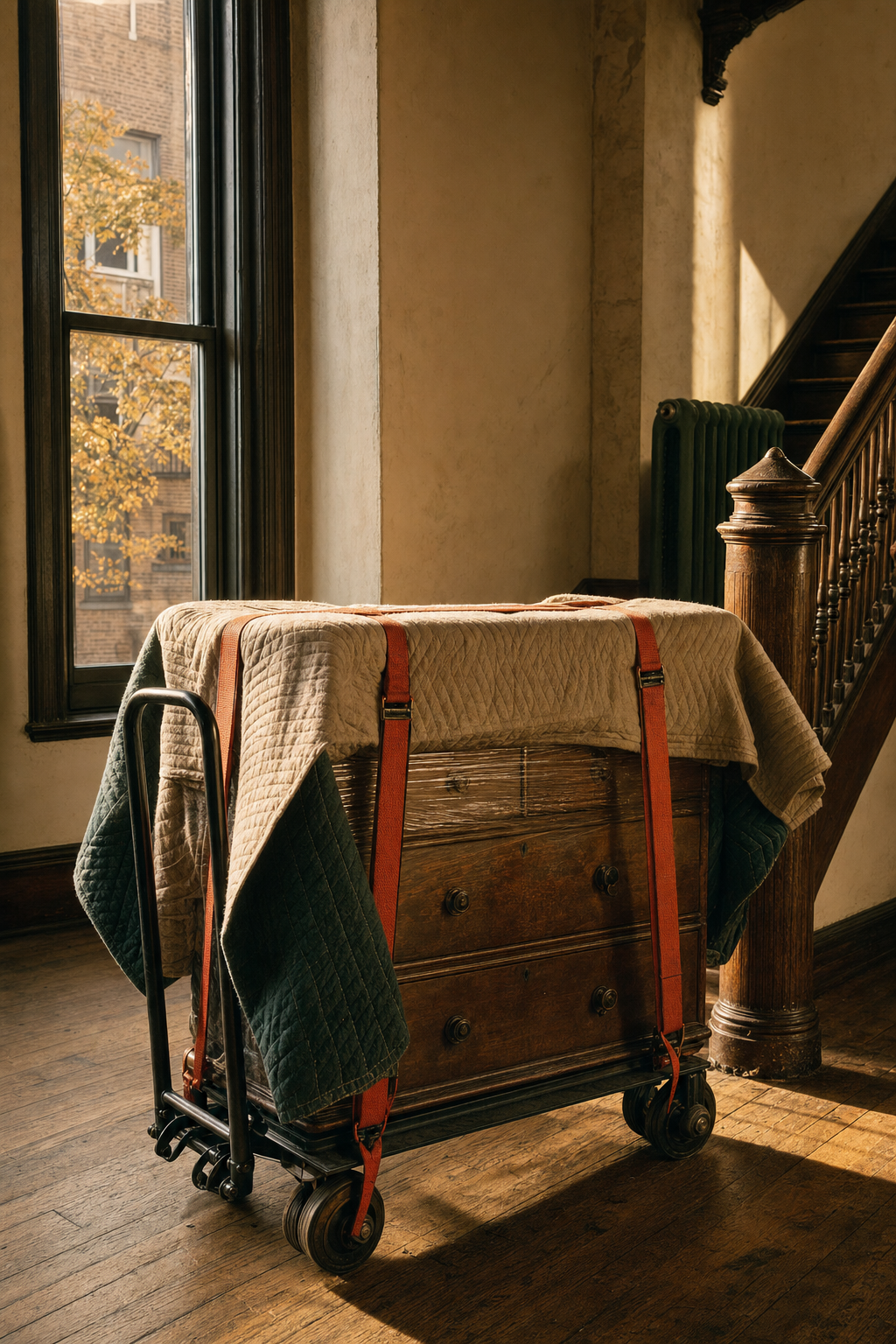
Beyond truck size, labor hours are the most significant driver of moving expenses in the Chicago area. When you learn how to declutter before moving, you are effectively removing hours from your final bill. Consider the logistics of a typical neighborhood like Lakeview. Carrying a heavy, unwanted solid oak dresser up a third-floor walk-up can add thirty minutes or more to the total time. When multiplied by a three-person crew, that single piece of furniture increases your labor costs significantly. If that item is destined for a corner where it will simply collect dust, you are paying a premium to transport a liability.
Efficiency is the core of mover economics. Every box you decide not to pack represents a direct reduction in the time our team spends loading, securing, and unloading. By auditing your belongings before requesting a quote for Velox Movers services, you ensure that you are only paying for the transport of items that add value to your new home. When you research how to choose a moving company, you will find that the most accurate estimates depend on a finalized inventory list. Removing just ten medium-sized boxes from your move can be the difference between a streamlined morning appointment and an all-day project. Every item you discard or donate is money back in your pocket.
When to Start Downsizing Your Chicago Home
Successful downsizing is a race against the calendar that should ideally begin at least six to eight weeks before your moving date. Starting early prevents the inevitable panic packing that occurs 48 hours before the truck arrives; this is usually when people end up paying to transport items they should have discarded. To maximize efficiency, adopt a high impact approach by tackling high volume storage areas first. In a Logan Square bungalow, this typically means auditing the basement; in a Gold Coast condo, focus on those deep, crowded hallway closets. These zones often harbor the heaviest and most forgotten items that inflate total labor hours.
A structured framework helps remove the guesswork from how to declutter before moving. The One Year Rule is the most effective filter: if you have not used an item throughout a full Chicago seasonal cycle, it does not deserve space in the new home. For those who find the process overwhelming, the 5 5 5 Rule provides a manageable daily target. In every room, identify five items to toss, five to donate, and five to sell.
By the time you are finalizing your professional moving services, your inventory should be lean and intentional. This proactive timeline allows you to handle disposal and sales at your own pace, rather than paying a moving crew to relocate clutter that you will simply end up throwing away during the first week in your new residence. Taking these steps early ensures that your final quote remains accurate and your move day remains focused on the items that actually matter.
Room by Room Decluttering Strategies

A tactical approach to how to declutter before moving requires looking at each room through the lens of logistics. The kitchen is often the most time-consuming area because of the high volume of small, fragile items. Focus on eliminating duplicates. Most households only need one or two high-quality spatulas, a single set of measuring cups, and a manageable number of food storage containers. Every duplicate you remove reduces the amount of bubble wrap and specialty boxes required, directly lowering your material costs.
In the bedroom, the closet often hides unnecessary weight. Use the reverse hanger method: turn all your clothes hangers backward. As you wear an item, return it to the rack with the hanger facing forward. When it comes time to book professional moving services, any hanger still facing backward represents an item that likely does not need to be packed. Reducing your wardrobe density means fewer wardrobe boxes, which take up significant floor space in a moving truck.
The living room is where you can find the most substantial savings by auditing large furniture. Bulk items are the primary drivers of moving costs. Chicago architecture presents unique challenges; narrow hallways in vintage greystones or tight service elevators in Gold Coast high-rises can turn a large sectional into a logistical liability. If a piece of furniture barely fit through the door when you moved in, there is a high probability it will increase labor hours during the exit. Before finalizing your inventory for Velox Movers services, measure your largest pieces. If a sofa or heavy armoire is nearing the end of its lifespan, it is often more cost-effective to sell it locally than to pay for the specialized labor required to navigate it through a cramped Chicago stairwell. Making these decisions early ensures that when you research how to choose a moving company, your inventory list is lean, accurate, and optimized for speed.
What Not to Do When Downsizing for a Move
Efficiency in how to declutter before moving is often compromised by a few common, avoidable mistakes. One of the most frequent errors is failing to measure the new floor plan. A sectional that fits perfectly in a sprawling Lakeview apartment may physically block a radiator or hallway in a more compact Lincoln Park unit. Transporting furniture that simply cannot function in your new space is a waste of resources.
You should also resist the urge to keep items based on a 'just in case' scenario. This mentality often results in the most expensive mistake: paying for professional moving services to relocate junk that you will inevitably discard within a month of arriving. Beyond labor and truck space, moving clutter carries hidden costs. A higher volume of items requires more packing supplies, more tape, and more specialty boxes. Furthermore, a larger inventory list can increase your insurance premiums; valuation coverage is often tied to the total volume and estimated value of the shipment.
Finally, do not forget to budget for disposal fees. If you wait until the last minute to realize an old mattress or heavy exercise machine won't fit, you may face steep municipal or private hauling fees. When you evaluate how to choose a moving company, remember that transparency in your inventory leads to more accurate Velox Movers services quotes, preventing unexpected costs on move day.
Where to Sell and Donate Items in Chicago

Once you have identified the items that will not be joining you in your new home, the focus shifts to efficient removal. Chicago offers a robust ecosystem for rehoming goods, which directly supports your goal of learning how to declutter before moving to reduce total inventory. For selling high quality pieces, neighborhood-specific Facebook Marketplace groups are often more effective than general listings. Groups like "Everything is Free in Wicker Park" or "Buy/Sell/Trade Logan Square" allow for quick local pickups, saving you the hassle of transporting items to a buyer yourself.
For donations, look beyond national chains to support local organizations that understand the Chicago community. The Brown Elephant, with locations in Andersonville and Lakeview, accepts furniture and home decor to benefit Howard Brown Health. Local organizations like Humble Design Chicago or various women's shelters often need gently used household goods to help families furnish new living spaces. Utilizing these resources ensures your unwanted items serve a purpose rather than adding weight to your move.
Certain items are objectively not worth the cost of professional moving services. Particle board furniture, frequently found in big-box retail sets, rarely survives the structural stress of being loaded and unloaded; the labor cost to disassemble and reassemble these pieces often exceeds their actual value. Additionally, outdated electronics and half-used cleaning supplies should be handled through the City of Chicago residential electronics recycling program or the Household Chemicals and Computer Recycling Facility on North Branch Street. Clearing these non-movables ensures that when you finalize your Velox Movers services, you are only paying to transport assets that justify the logistical effort. This level of preparation is a key part of your how to choose a moving company strategy, as a leaner inventory results in a more transparent and competitive quote.
Managing the Emotional Side of Letting Go
Transitioning from a long-term Chicago residence involves more than just logistical planning; it is an emotional decoupling from years of history. When you determine how to declutter before moving, the items that prove most difficult to let go of are rarely the most expensive, but rather the ones tied to significant memories. A vintage mahogany desk that served as a home office in a Wicker Park greystone or a collection of heavy heirloom china may not fit the aesthetic or dimensions of a new space. To manage this, we recommend a "Legacy Digitization" strategy. Take high-quality photographs of large or fragile items that no longer serve a functional purpose. Storing these images in a dedicated digital album allows you to carry the memory forward without paying for the truck space or labor hours required to transport the physical object.
If certain items remain non-negotiable, establish a "Memory Box" with strict physical boundaries. Confining sentimental keepsakes to a single, well-packed container ensures these pieces receive priority during Velox Movers services while preventing sentimental items from bloating your inventory. This focused approach is a critical step when you research how to choose a moving company, as it allows you to provide a clear, finalized list of essentials. By intentionally choosing what to keep, you reduce the stress of the transition and ensure that your professional moving services are dedicated only to the items that will truly make your new house feel like a home.
Taking the time to declutter your Chicago home is the most effective way to lower moving costs and ensure a seamless start in your new space. By focusing on what truly matters, you simplify every stage of the process. If you want expert help managing the rest of your move, our team is ready to assist. You can explore our available Services to see how we can handle the heavy lifting while you focus on settling into your next chapter.