Prepare for your move by reviewing contracts, decluttering belongings, and labeling boxes clearly before your professional movers arrive. Utilizing a comprehensive day of moving checklist helps you coordinate logistics like parking and elevators; additionally, it ensures you have secured pets and kept essential valuables with you for the journey.
The morning of a move often feels like a race against a clock that is ticking twice as fast as usual. While you may feel organized, the transition from a packed home to a loaded truck involves high-stakes logistics that can impact your final invoice. In a city like Chicago, factors such as narrow alleyways and rigid elevator schedules require precise timing to avoid costly delays. At Velox Movers, we have found that expert preparation is the most effective way to ensure a streamlined, professional experience. This guide outlines the essential steps to take before our crew rings your doorbell. You will learn how to manage urban parking logistics, categorize your valuables, and prepare specific furniture pieces for safe transport. By following this practical checklist, you can transform moving day from a source of anxiety into a well-executed operation.
Why Preparation is the Secret to a Cheaper Chicago Move
In the Chicago market, local moves are almost exclusively billed on an hourly basis. This means the efficiency of your space directly dictates the final cost of your bill. While many view preparation as a way to reduce stress, a truly effective day of moving checklist serves a much more practical purpose: maximizing the productivity of your crew. Every minute a professional team spends clearing a path through loose items or waiting for a freight elevator is a minute you are paying for.
At Velox Movers, we view ourselves as your partners in efficiency. If a crew has to stop to tape a box that was not properly closed or navigate around furniture that has not been cleared of decor, the move slows down. By contrast, a home that is staged for rapid loading allows our team to maintain a steady, high-speed rhythm. This strategy moves beyond generic advice and focuses on the logistics of labor. When you invest time in how to pack for a move correctly, you are not just helping us; you are actively lowering your relocation expenses. Utilizing professional moving services is most cost-effective when the crew can focus entirely on the heavy lifting rather than basic site preparation.
The Logistics Checklist: Parking, Elevators, and Chicago Alleyways

Chicago's urban layout presents specific challenges that can derail a move if not addressed. The most critical item on your day of moving checklist is securing a legal parking space for the truck. In neighborhoods like Lakeview or Lincoln Park, a 26 foot box truck cannot simply double park. You must visit your local Alderman’s office or the Department of Transportation to obtain City of Chicago "No Parking" signs. These must be posted at least 24 to 48 hours in advance to be enforceable. If we arrive and the space is occupied, the time spent finding a new spot or waiting for a tow adds significant labor costs.
If you are moving in or out of a high rise, confirm your service elevator reservation weeks in advance. Freight elevators are often shared with other tenants or deliveries; failing to secure a dedicated block means our crew might wait 15 minutes between loads. Additionally, check the clearance of your alleyway if that is the primary load in point. Low hanging branches, discarded furniture, or overflowing garbage bins can block a truck's path.
Before the crew arrives, walk the exact route from your front door to the designated parking spot. Remove any obstacles such as loose rugs, toys, or debris. If your path involves stairs or tight hallways, ensure there is no artwork or lighting fixtures that could be bumped. This proactive approach ensures that when you hire professional moving services, the team can focus on the technical aspects of the haul rather than navigating preventable obstacles. If you are still choosing a moving company in Chicago, look for teams that prioritize these logistics to avoid mid-move delays.
Should You Empty Dressers Before Movers Arrive?
A common question on every day of moving checklist is whether furniture needs to be completely emptied. While some companies allow lightweight clothing to remain inside, Velox Movers strongly recommends emptying all dressers, chests, and armoires. This is not just a matter of total weight; it is a matter of physics and furniture longevity.
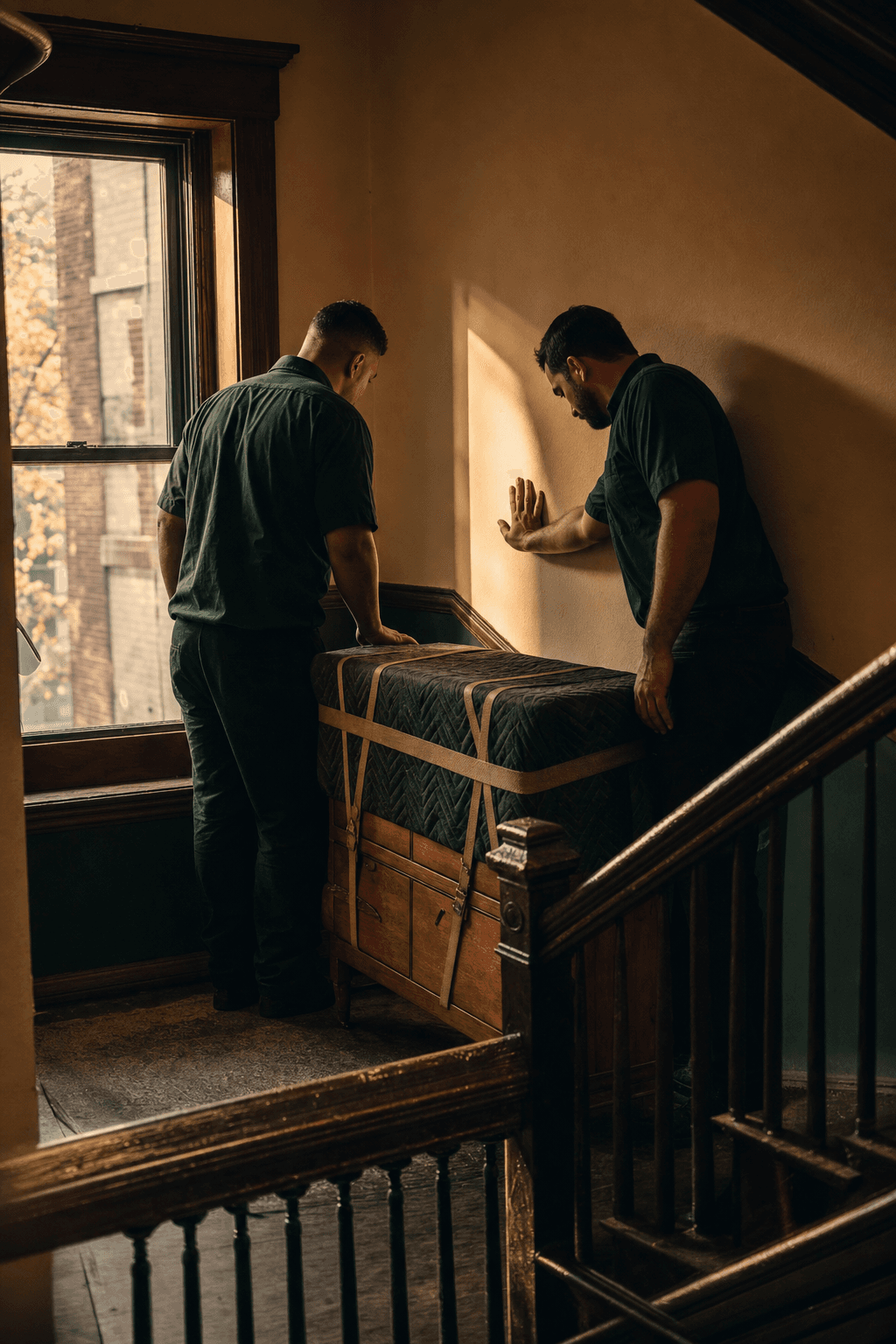
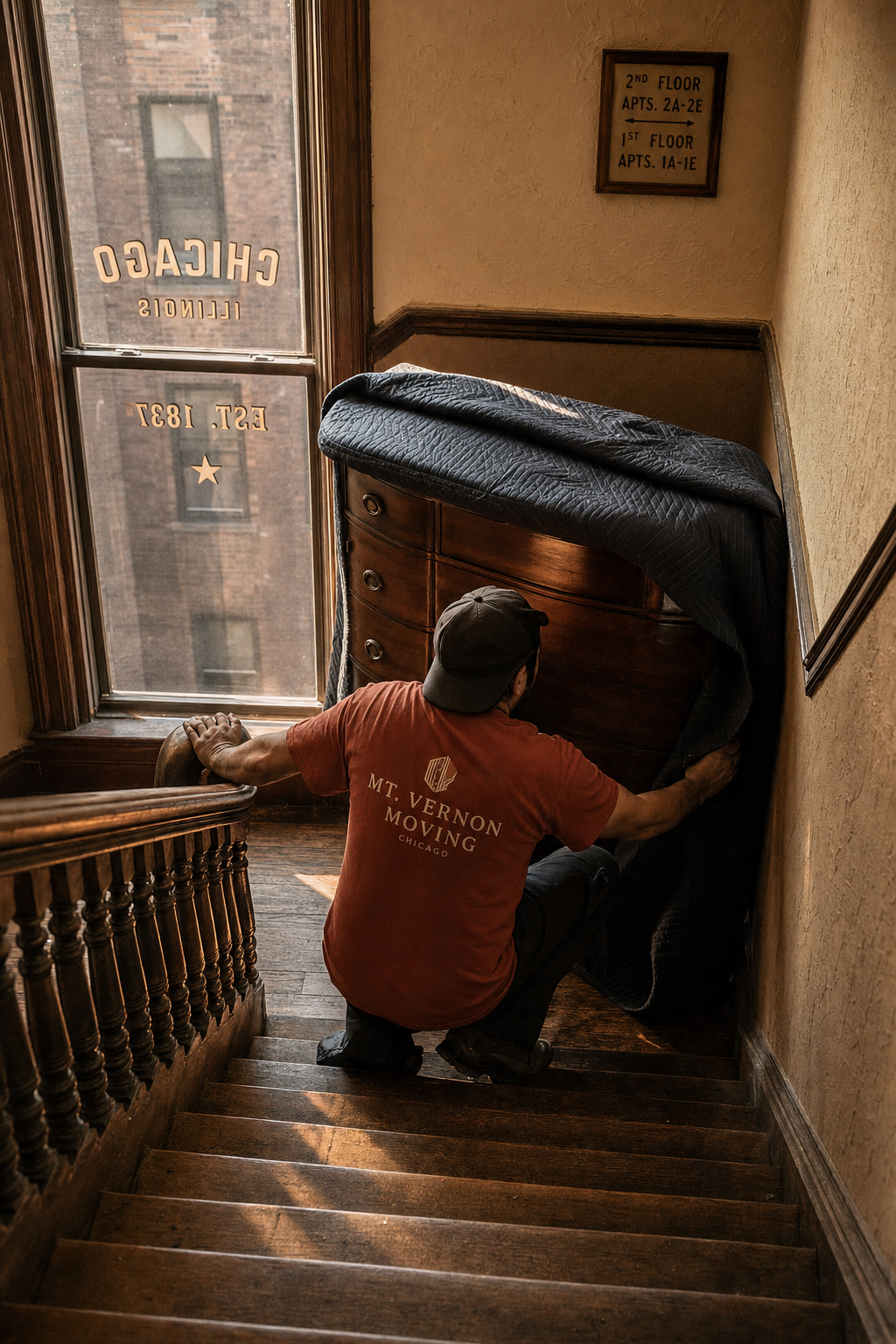
Most furniture joints are designed to handle vertical pressure from gravity. However, during a move, especially when navigating the narrow stairwells of a Chicago three-flat, pieces must be tilted or carried at sharp angles. When a dresser contains fifty pounds of clothing, that weight shifts to the side, placing immense lateral stress on the frame and fasteners. This can cause the furniture to rack or the joints to loosen, leading to structural damage that is often irreparable.
Emptying units also ensures the safety of the crew. An unbalanced load is significantly more difficult to control on stairs. If you wish to use the drawers as storage to save on boxes, you must remove them entirely from the frame and wrap them individually in plastic stretch film to secure the contents. By following this protocol for how to pack for a move, you ensure your furniture arrives at your new home in the same structural condition it left the old one.
Establishing a Do Not Move Zone for Essentials and Valuables

Establishing a designated "Do Not Move" zone is a critical step in your day of moving checklist that prevents the accidental loading of high priority items. When our crew enters a home, they operate with a focus on maximum loading efficiency. Without a clearly marked boundary, essential items can easily end up at the nose of a 26 foot truck, making them inaccessible until the entire move is complete at your new Chicago residence.
Select a small, enclosed area such as a guest bathroom or a specific corner of the kitchen counter to serve as your staging point. Use bright painter’s tape to mark off the section or place a large sign on the door. Items to sequester in this zone include:
Daily medications and a basic first aid kit.
Phone, tablet, and laptop chargers.
A basic toolkit with a screwdriver and hex keys for immediate reassembly needs.
Critical paperwork, including the new lease agreement, closing documents, and your moving contract.
For high value items like jewelry, passports, and small family heirlooms, the safest protocol is to place them directly in your personal vehicle before the crew arrives. Keeping these items with you eliminates any risk and ensures they are not subjected to the physical logistics of the main haul. When you are learning how to pack for a move, organization is not just about the boxes; it is about ensuring your car keys and essential electronics stay within reach throughout the transition.
Furniture and Appliance Preparation Checklist
Once your essentials are secured, turn your attention to the technical readiness of your appliances and large furniture. This phase of the day of moving checklist focuses on mitigating mechanical risks and optimizing the crew's time. For appliances, refrigerators must be emptied, disconnected, and defrosted at least 24 hours prior to our arrival. A fridge that has not been properly dried will leak during transit, potentially damaging other items on the truck. Similarly, ensure all water lines for ice makers and washing machines are disconnected and drained to prevent spills on your floors.
Handling electronics requires attention to detail. Instead of leaving cords to dangle or get tangled, bundle them tightly and secure them to the back of the device using painter’s tape. This specific tape is preferred because it leaves no sticky residue on your equipment. If you are looking to minimize your hourly labor costs, consider disassembling complex items like oversized bed frames, dining tables, or multi-piece desks before we arrive. While our team provides professional moving services that include basic disassembly, doing this work yourself allows the crew to transition immediately to loading, which reduces your total billable time.
Finally, consider floor protection. Although Velox Movers provides professional-grade runners and padding to shield your hardwoods and carpets, adding your own layer of clean cardboard in high-traffic hallways can further expedite the process. When you master how to pack for a move, these technical preparations ensure that the physical transition from your home to the truck is seamless and swift.
Final Walkthrough: What to Do the Hour Before Arrival
The sixty minutes before our truck pulls up to your curb is the final window to optimize the environment for speed. Start by turning off your HVAC system. Since doors will remain open during the loading process, running the heat or air conditioning is a waste of energy; additionally, keeping the AC off in the summer prevents the system from sucking in street dust. Use this time to perform a final sweep of the path leading to the truck. If you are moving during a Chicago winter, apply salt to the stairs and sidewalk to ensure a slip-free surface for the crew.
Secure pets in a bathroom or crate with a clear sign to prevent escapes or trip hazards. Perform a final digital audit by taking timestamped photos of high-value items like electronics or antiques immediately before they are loaded. This provides concrete proof of condition for insurance purposes. Completing these rapid-fire tasks on your day of moving checklist ensures the team can begin professional moving services the moment they arrive.
Moving Day Communication: Setting Your Crew Up for Success

Once the Velox team arrives, establish a single point of contact by identifying the crew lead. Begin with a comprehensive walk-through of your home before any items are moved. Point out specific fragile pieces, furniture with pre-existing surface wear, and items that require special handling. This initial investment of ten minutes is a crucial part of your day of moving checklist, as it sets the rhythm for the entire project and minimizes the risk of damage.
To ensure the move-in process is just as efficient as the load-out, clearly mark the rooms at your new residence with signs that correspond to the labels you created when learning how to pack for a move. This allows the crew providing professional moving services to place items correctly without needing to stop and ask for direction for every box. Remain present on-site or easily reachable by phone to answer logistical questions. When choosing a moving company in Chicago, remember that effective communication transforms a simple labor contract into a coordinated, professional relocation experience.