Moving heavy furniture is safe to DIY when using equipment like moving straps for standard items, but hiring professionals is often cheaper for specialty pieces or staircases. Professional movers minimize the risk of expensive property damage and personal injury, providing better long-term value for complex or high-risk relocation tasks.
Staring at a three hundred pound solid oak dresser or a commercial grade refrigerator can turn any move into a logistical nightmare. The physical strain is only the beginning, as one misplaced step or a loss of grip can result in a lifelong back injury or permanent damage to your home’s pristine hardwood floors. Moving heavy items requires more than just muscle; it demands a deep understanding of physics and the right specialized equipment. In this guide, we will analyze the technical strategies for navigating Chicago’s narrow hallways and steep stairs with oversized items like safes and pianos. You will also learn when the hidden costs of truck rentals and equipment upgrades make hiring a professional team the more economical choice. From proper lifting mechanics to appliance preparation, we provide the expert insights necessary to protect both your health and your assets.
The Physics of Moving Heavy Furniture Without Injury
Moving heavy furniture is less an act of raw strength and more a study in force and leverage. The most common mistake is ignoring the body's natural mechanics by bending at the waist. This creates a lever where the lower vertebrae act as a fulcrum, bearing the entire weight of the object. To avoid injury, maintain a neutral spine, keep the chest up, and drive through the heels using the quadriceps and glutes. These are the largest muscle groups in the body and are designed to handle the vertical load that professional moving services manage daily.
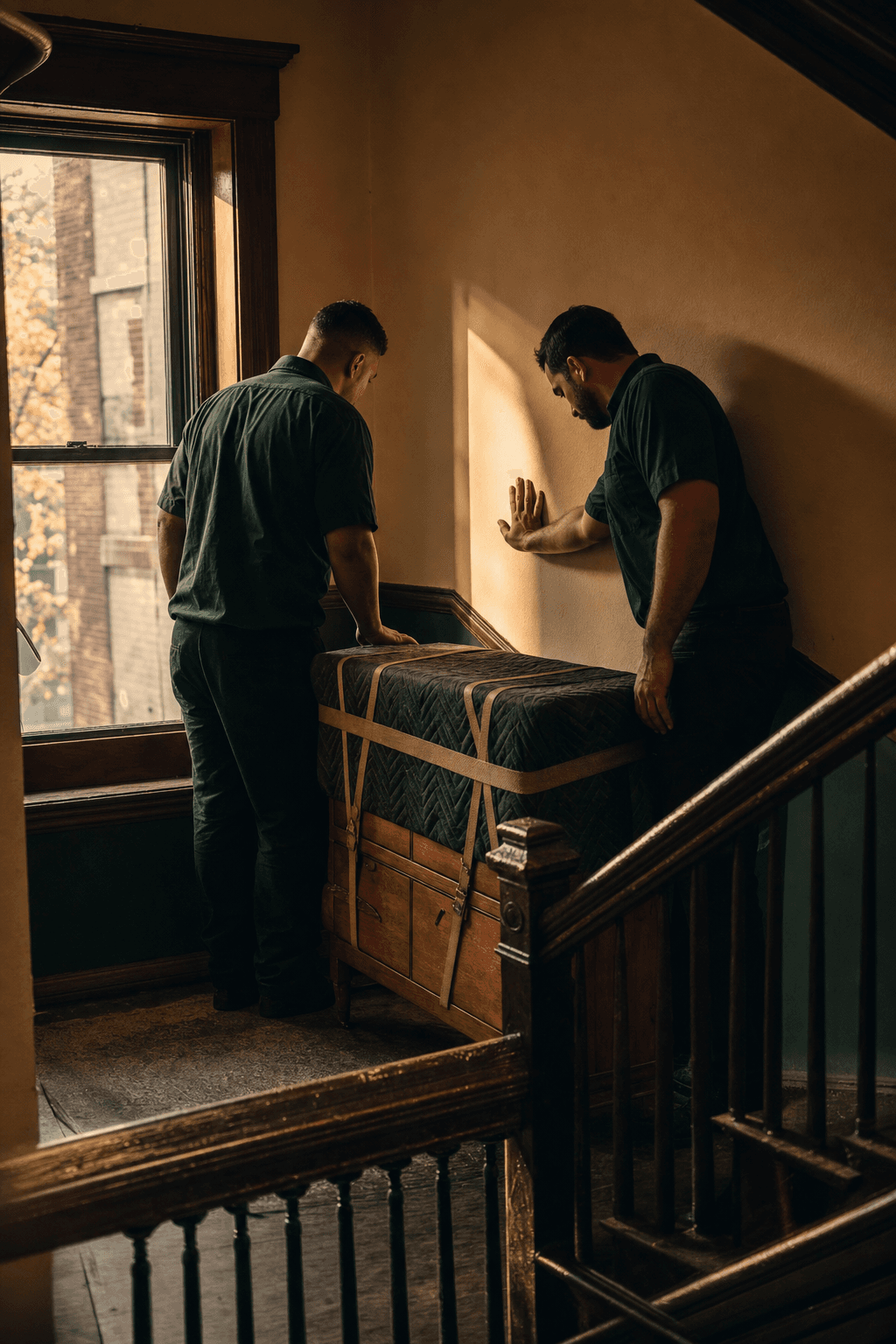
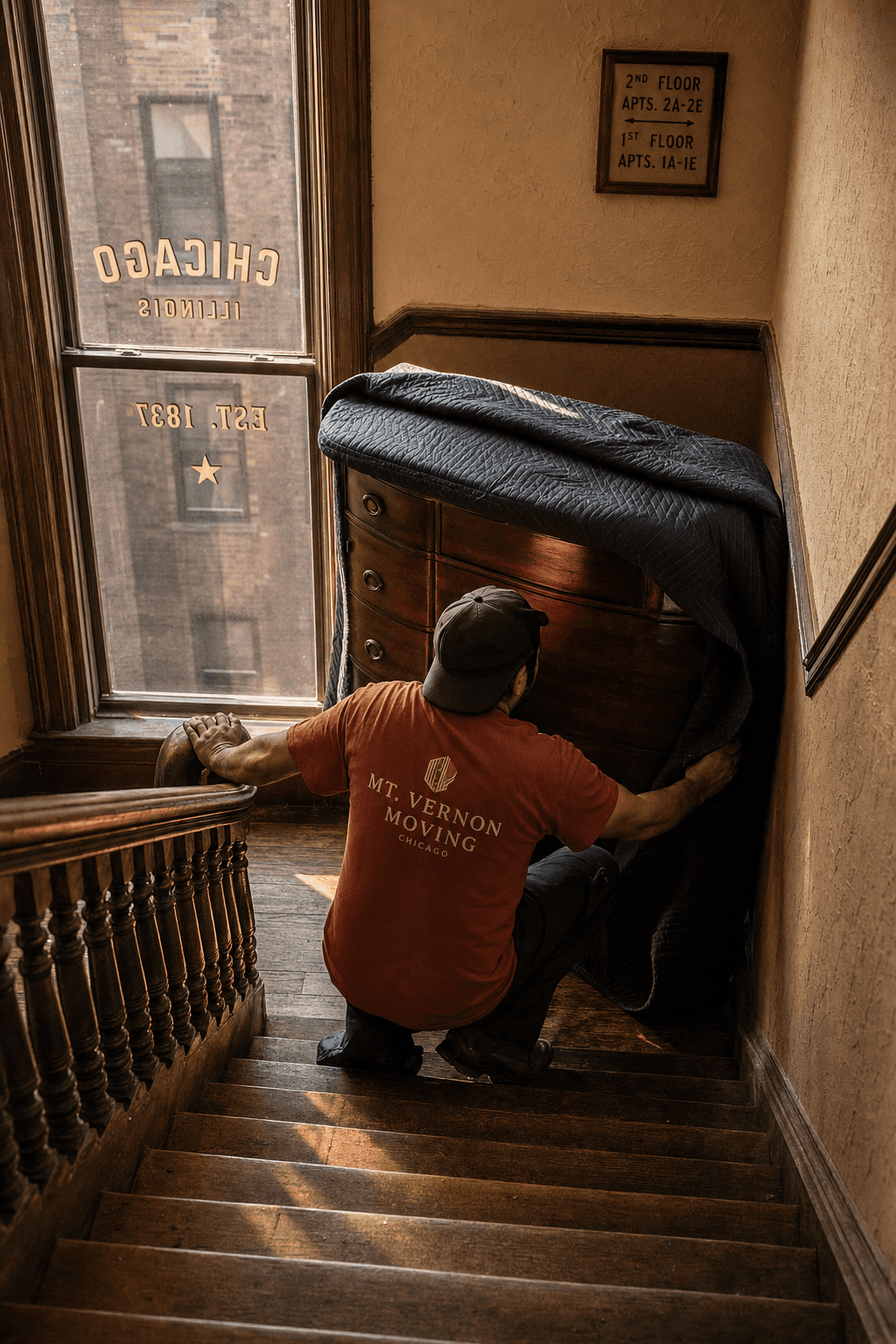
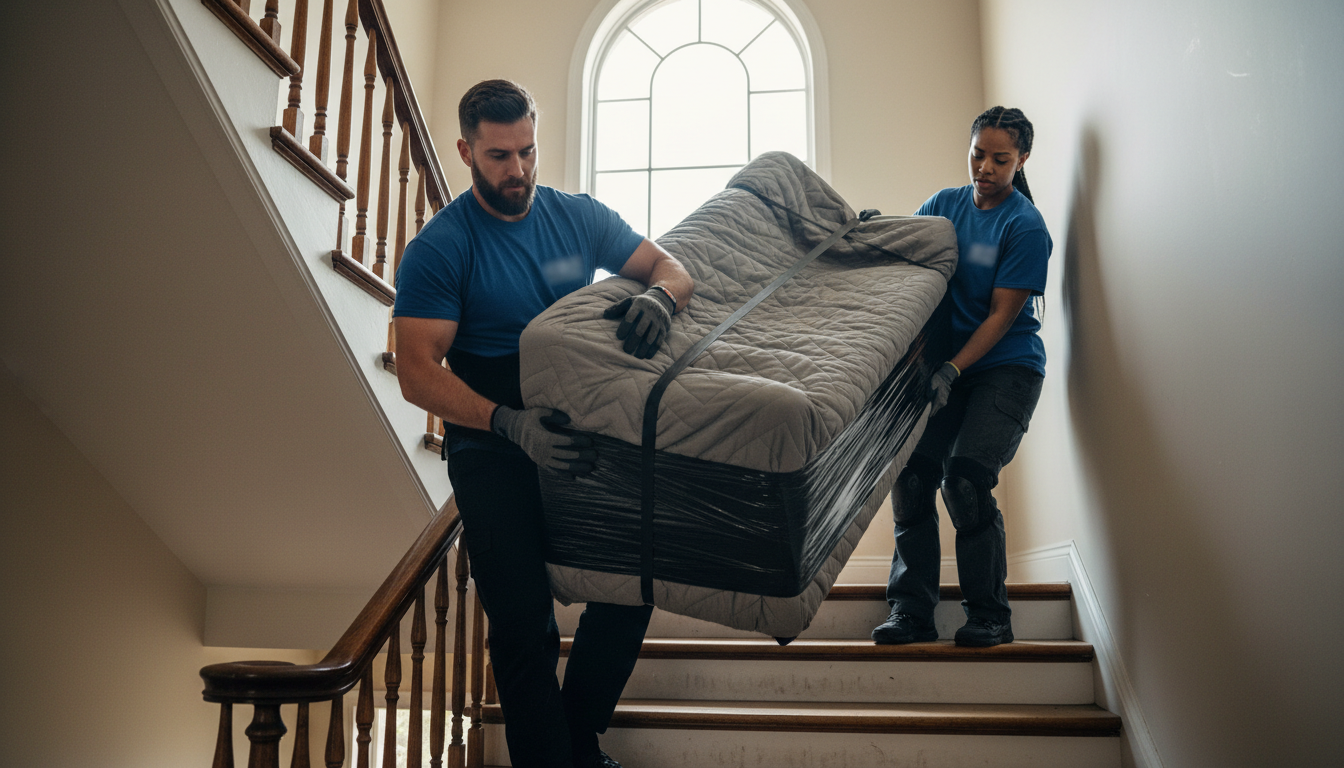
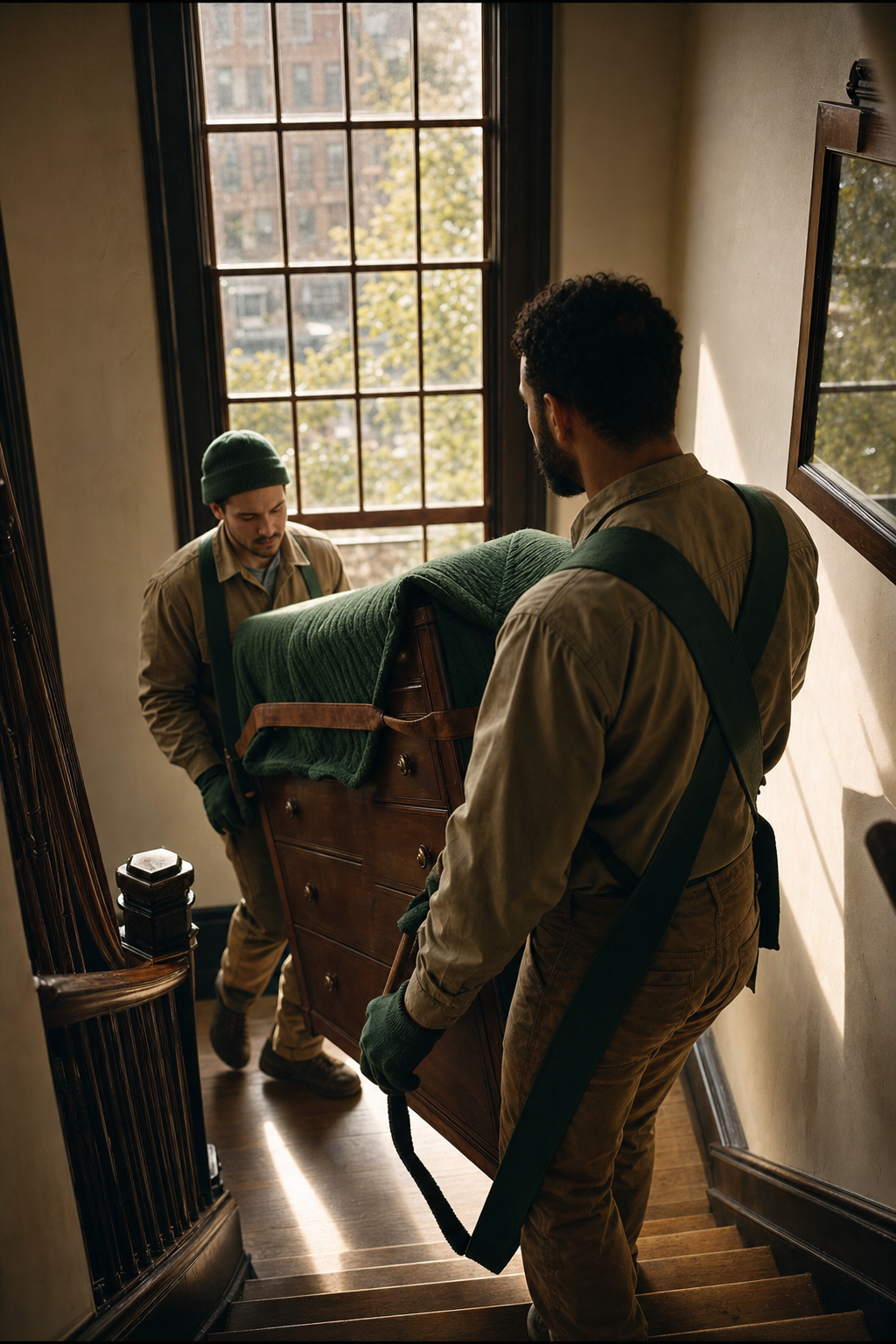
When navigating the narrow staircases common in Chicago three-flats, the high-low technique is the industry standard. One person carries the item from the top while the other carries from the bottom. This method keeps the furniture at a consistent angle, distributing weight more evenly. However, top-heavy items like armoires or tall dressers present a unique challenge because their center of gravity is located much higher than a standard table. If these items are tilted too far, the center of gravity shifts outside the base of support, leading to a "runaway" piece that can crush a mover. Always keep these items as vertical as possible during transit.
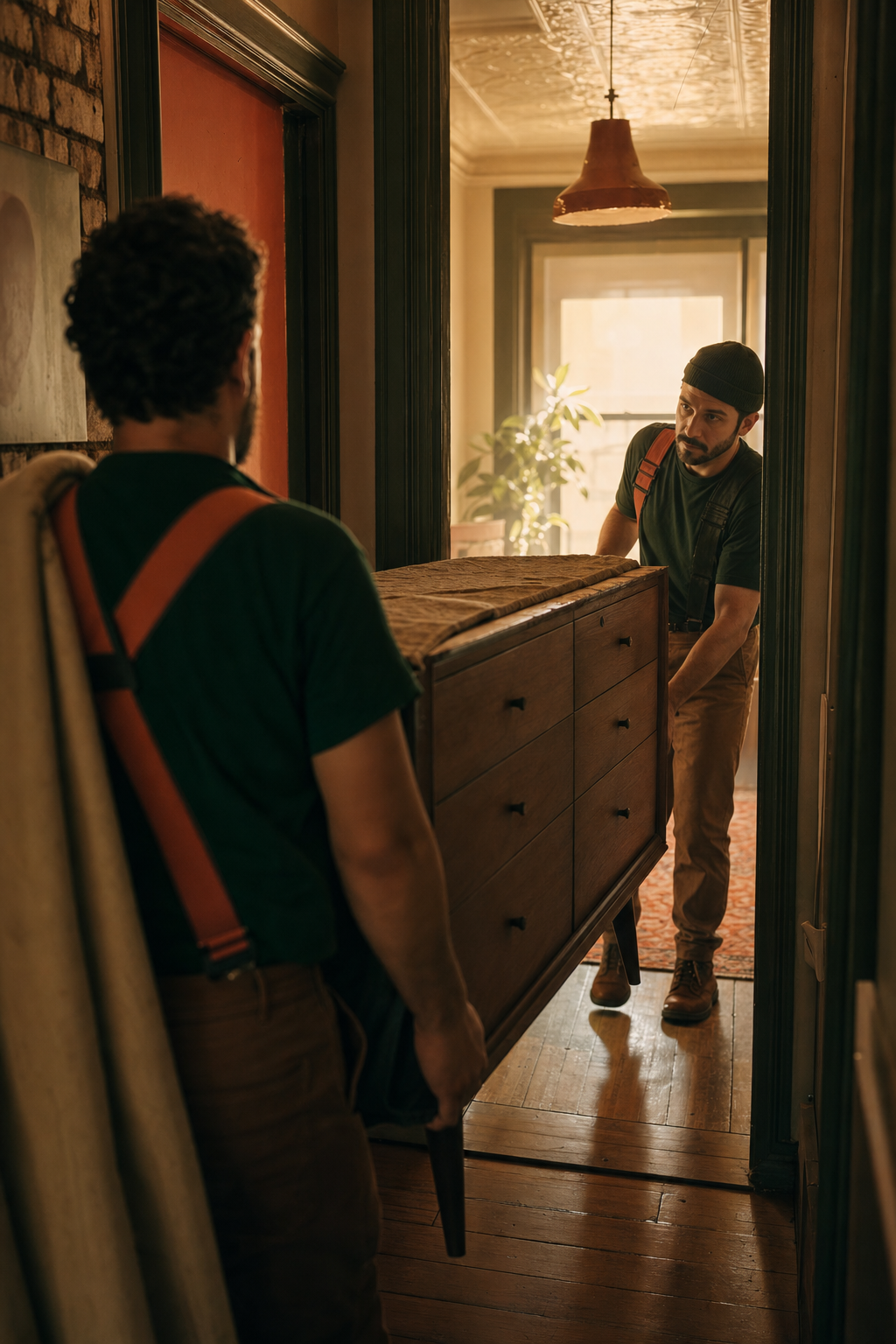
For tight corners, a frequent hurdle in older city layouts, use the L-shape maneuver. This trick involves turning a sofa or armchair on its side to form an "L." By hooking the back of the piece through the doorway or around the corner first, you can then pivot the rest of the frame through the opening. Mastering these physics based approaches is a key part of what defines the expertise of about our Chicago team.
Essential Equipment for Moving Heavy Objects Without a Dolly
Understanding body mechanics is the foundation, but even the best technique requires specific gear to safely manage weight when a dolly is impractical. In narrow Chicago hallways where a two-wheeled cart cannot maneuver, moving straps are the primary alternative. Professional crews often prefer shoulder dollies over forearm forklifts for significant loads. Shoulder dollies utilize the strength of your torso and legs while keeping your hands free to stabilize the item. In contrast, forearm forklifts place the weight entirely on your skeletal structure in the arms, which increases the risk of fatigue. Professional-grade straps feature high-tensile nylon and reinforced buckles, whereas cheap hardware store versions often lack the durability to handle a 300-pound dresser safely.
For horizontal movement across flat surfaces, furniture sliders are indispensable. You must match the slider to the surface: hard plastic for carpet and felt-bottomed sliders for hardwood or tile. To place them without straining, use a 'toe-kick' or a small pry bar to slightly tilt the furniture, just enough to clear the floor by a half-inch, while a partner slides the pad under the corner. The goal is to avoid a full vertical lift, which saves your lower back for the transit phase.
If you lack commercial sliders, the rug technique is a reliable substitute for hardwood floors. Placing a heavy moving blanket or a small rug, pile side down, under the legs allows you to slide the item with minimal friction. If you find an item is too heavy to even tilt for slider placement, choosing a moving company for that specific piece is the safest way to prevent structural damage to your home. Using the wrong equipment or low-quality straps can result in snapped webbing, leading to dropped furniture and potential floor gouges.
Protecting Chicago Hardwood Floors and Narrow Hallways
Chicago homes, particularly the classic three-flats and bungalows, often feature original red or white oak hardwood floors that are susceptible to deep gouges when moving heavy furniture. While many DIYers rely on moving blankets, these offer little protection against the concentrated pressure of a heavy dresser leg or a shifting appliance. For superior floor defense, professional crews use Masonite sheets or Ram Board. Masonite provides a rigid, hard-surface barrier that effectively distributes weight across a larger area, preventing the wood fibers underneath from crushing. Ram Board is a heavy-duty, breathable temporary floor protection that stays flat and resists impact better than standard builders' paper.
Navigating narrow hallways requires protecting more than just the floor. Door jambs are high-impact zones; use spring-loaded jamb protectors or thick moving pads secured with stretch wrap to prevent wood splintering. When addressing how to protect stairs, skip the common DIY tactic of using flattened corrugated cardboard. Cardboard is notoriously slippery and can slide out from under a mover's feet, leading to a dangerous fall. Instead, use self-adhesive, non-slip stair runners designed for high-traffic protection. These provide necessary traction while shielding the treads from scratches. Protecting these architectural details is a core priority for about our Chicago team, as repairing historic trim and flooring often exceeds the cost of professional moving services altogether.
The Strategy for Moving a 500 lb Safe or Piano Upstairs
Attempting to move a 500 lb gun safe or a console piano up a flight of stairs shifts the project from a difficult task to a high-risk technical operation. These items drastically alter the risk profile because they exceed the capacity of standard manual labor. While a dresser might be heavy, a 500 lb object creates concentrated point loads that can exceed the structural integrity of residential stair treads, particularly in older Chicago bungalows where wood may have aged.
For these specialized tasks, manual lifting is replaced by heavy-duty equipment like motorized stair climbers. These machines use a powered caterpillar track or a mechanical lift foot to climb each riser while the operator maintains the balance. If a motorized climber is unavailable, a reinforced steel ramp system is required to bridge the stairs. Attempting this with basic straps or a standard dolly often results in a runaway heavy object. Once an item of this mass begins to slide, it gains kinetic energy that no human can arrest, posing a lethal threat to anyone below it and causing catastrophic structural damage to the home.
Navigating these weight limits safely is a primary reason for choosing a moving company that possesses industrial-grade rigging equipment. While professional moving services offer the muscle, the true value for ultra-heavy items lies in the mechanical advantages that DIY moves lack. This complexity is often why the perceived savings of moving heavy furniture yourself vanish when compared to the potential for property destruction.
The Hidden Costs of DIY: When Hiring Pros is Actually Cheaper
Calculating the total expense of moving heavy furniture often stops at the price of a truck rental. However, the base rate advertised on many rental trucks is only a fraction of the actual cost. When you factor in mileage, refueling, and essential collision damage waivers, the price escalates quickly. Furthermore, a DIY move requires purchasing specialized equipment that professional moving services already possess. Buying industrial-strength straps, furniture sliders, and floor protection like Ram Board can easily add $200 to your budget, costs that are typically absorbed into a professional service quote.
Property damage is the most common hidden cost. A single slip while carrying a heavy sleeper sofa can gouge original oak flooring or crack drywall in a narrow hallway. The expense of hiring a professional floor refinisher or a skilled painter often exceeds the fee for hiring a crew to handle the labor.
Expense Category | Potential DIY Cost | Professional Inclusion |
|---|---|---|
Equipment Purchase | $100 - $250 (Straps, Sliders, Pads) | Included in service |
Floor Protection | $50 - $150 (Masonite/Ram Board) | Included in service |
Property Repair | $300 - $1,200 (Gouged floors/Drywall) | Insured and protected |
Physical Therapy | $150+ per session (Back strain) | Trained professionals |
The most significant financial risk is the medical cost of overexertion. Research indicates that back injuries account for 60% of all moving-related physical issues. A single disc injury or severe strain from lifting a commercial-grade appliance can lead to thousands of dollars in medical bills and lost wages. When choosing a moving company, you are essentially purchasing insurance against these long-term physical and financial liabilities. For awkward, high-density items, the price of a professional crew is almost always lower than the combined cost of equipment, repairs, and potential healthcare.
Items Professional Movers Cannot or Will Not Move
Even when hiring professional moving services to handle the physical strain of moving heavy furniture, certain items remain strictly prohibited from transit due to federal safety regulations. Hazardous materials pose a significant risk in the enclosed environment of a moving truck, where shifting loads or temperature fluctuations can trigger combustion or chemical leaks.
Professional crews will decline to transport the following items: - Flammable liquids: Gasoline, kerosene, and lighter fluid. - Compressed gases: Propane tanks and oxygen cylinders. - Corrosives: Lead-acid batteries and pool chemicals. - Explosives: Ammunition, fireworks, and black powder.
Movers also typically exclude aerosol cans, paint thinners, and industrial-strength cleaning agents. Understanding these limitations is essential when choosing a moving company, as these items must be properly disposed of or transported in your personal vehicle. By handling the hazardous DIY portion of your relocation ahead of time, you ensure the about our Chicago team can focus on safely navigating your heavy dressers and appliances without environmental risk.
How to Prepare Appliances for a Safe Transition
Preparing appliances is just as critical as moving heavy furniture correctly. Before the about our Chicago team arrives for your scheduled pick-up, appliances must be fully decommissioned. Refrigerators require a minimum 24 hour defrost period to prevent internal ice from melting and leaking onto hardwood floors during transit. Similarly, water lines for ice makers and washing machines should be disconnected and drained well in advance to ensure no residual moisture spills into the truck or onto your property.
High efficiency washing machines are particularly sensitive to movement; you must secure the drum using manufacturer-specific shipping bolts or transit rods. Moving a washer without these stabilizers can lead to irreparable internal suspension damage. For dryers, particularly gas units, ensure a licensed technician has capped the gas line, as professional moving services are restricted from handling gas utility reconnections for safety reasons.
Protecting aesthetics is another priority. Moving heavy appliances through narrow Chicago galleys often leads to surface damage. Stainless steel is especially prone to deep scratches. To mitigate this, apply a layer of clean cardboard or high density foam over the front panels, then wrap the entire unit in professional grade moving blankets secured tightly with stretch wrap. This padding provides a buffer against the tight door frames and sharp corners typical of city apartments, ensuring your appliances arrive in pristine condition.
Relocating heavy furniture and bulky appliances requires a careful balance of physical safety and logistical planning. While handling smaller items on your own can save money, the risk of injury or property damage often outweighs the initial savings of a DIY move. If you want expert help to ensure your belongings reach their new home securely, exploring professional Moving Services is a great next step. Our team has the specialized equipment and experience needed to handle the heavy lifting, allowing you to focus on settling into your new space without any unnecessary physical strain.