The most efficient way to learn how to pack for a move is to start early by decluttering, labeling every box with its specific contents, and packing a separate essentials bag for your first night. You can save time and money by using household linens to protect fragile items and utilizing suitcases for heavy belongings like books or shoes.
Most homeowners view packing as a chore to be completed at the last minute, yet this lack of preparation is exactly what drives up moving costs and increases the risk of damage. At Velox Movers, we have seen how disorganized boxes lead to longer labor hours and unnecessary stress during transit. A strategic approach to packing is not just about organization; it is a direct investment in your bottom line. In this guide, we provide a sophisticated roadmap for your transition, including the 5 4 3 2 1 and 3 3 3 rules for systematic sorting. You will learn how to select high quality supplies that protect your valuables and discover room by room strategies designed to navigate Chicago's unique high rises and narrow streets. By mastering these professional techniques, you ensure a move that is as efficient as it is secure.
Why Your Packing Strategy Directly Affects Your Moving Bill

For most residents, the total cost of a relocation is directly tied to the clock. In Chicago, local moves are typically billed by the hour, meaning every minute your crew spends navigating a hallway or rearranging the truck adds to your final invoice. Your strategy for how to pack for a move is the single biggest factor in controlling these costs.
When you use uniform, professional grade boxes, you allow movers to utilize stacking logic. Standardized dimensions allow us to build stable tiers in the truck quickly, reaching the ceiling without compromising safety. If you use miscellaneous grocery store boxes of varying sizes or, worse, leave items loose, the loading process slows down significantly. Loose items and open bags are difficult to stack; they often require twice as long to load because they must be handled individually and secured with extra padding to prevent shifting.
In high rise buildings common in neighborhoods like the Loop or Gold Coast, efficiency is even more critical. Each trip to the elevator represents a fixed time cost. A well packed home with clearly labeled, stackable boxes minimizes these trips and ensures the crew moves at peak speed. Conversely, disorganized packing often necessitates extra labor on moving day to fix unstable loads or repack fragile items, further driving up the price. If the task seems daunting, investing in professional moving services for the packing phase often pays for itself by drastically reducing the billable hours on moving day. When choosing a moving company in Chicago, always ask how their packing standards influence their estimated timeframes.
The Packing Timeline: When to Start for a Stress Free Move
Determining how far in advance you should start packing depends on the size of your household, but a standard timeline for a two or three bedroom Chicago home is six to eight weeks. This window allows you to execute the declutter first rule. Because local crews charge by the hour and volume, moving items you no longer want is effectively paying a tax on clutter. Use the first two weeks to sell, donate, or discard items that do not fit your new floor plan.
If you are facing a high speed relocation, your strategy must shift from organization to triage. For those wondering how to pack for a move in two weeks, focus exclusively on high use essentials like kitchenware and daily clothing first. Box up one room per day, starting with the least used spaces like guest rooms or storage closets.
If the timeline shrinks to three days, the only realistic way to maintain safety and organization is to utilize professional moving services for the bulk of the packing. Professional crews can pack a standard apartment in hours that would take an individual several days. In these compressed scenarios, skip the detailed sorting and focus on clear labeling so the crew knows exactly which items require high priority placement in the truck. This systematic approach ensures that even a last minute transition remains efficient and cost effective.
Understanding the 5 4 3 2 1 and 3 3 3 Rules for Packing
Once your timeline is set, the sheer volume of possessions often leads to decision fatigue. To maintain momentum, professional organizers often recommend structured frameworks to quantify progress and prevent burnout. The 3-3-3 rule is ideal for the early weeks of your schedule. By committing to three hours of packing, three boxes, three times a week, you build a consistent habit. This steady approach ensures you are not left with an unmanageable workload in the final days before your crew arrives.
As moving day approaches, the 5-4-3-2-1 rule provides a higher intensity structure for a full household. This involves selecting five target rooms and packing four boxes per room every day. Devote three hours to the task, involve two people to speed up the process, and allow for one hour of rest to stay sharp. These metrics transform the abstract question of how to pack for a move into a series of achievable daily quotas that keep the relocation moving forward.
To streamline the sorting process, apply the 3-5-7 rule. Divide items into three piles (keep, donate, or discard), organize them into five main categories such as textiles, kitchenware, or electronics, and aim to finish a room every seven days. If you find yourself paralyzed by the scale of the task, utilizing professional moving services can provide the necessary labor to get your packing back on track and ensure your home is ready for the truck.
Essential Supplies: Why Free Boxes Might Cost You More

While sourcing free boxes from a local liquor store or grocery shop seems like a cost-saving measure, it often backfires during transit. These boxes are typically manufactured from thin, single-wall cardboard designed for static storage rather than the vertical pressure of a moving truck. When you are learning how to pack for a move, prioritize structural integrity. A collapsed box at the bottom of a stack can cause an entire tier to shift, potentially damaging valuables and slowing down the crew as they work to stabilize the load.
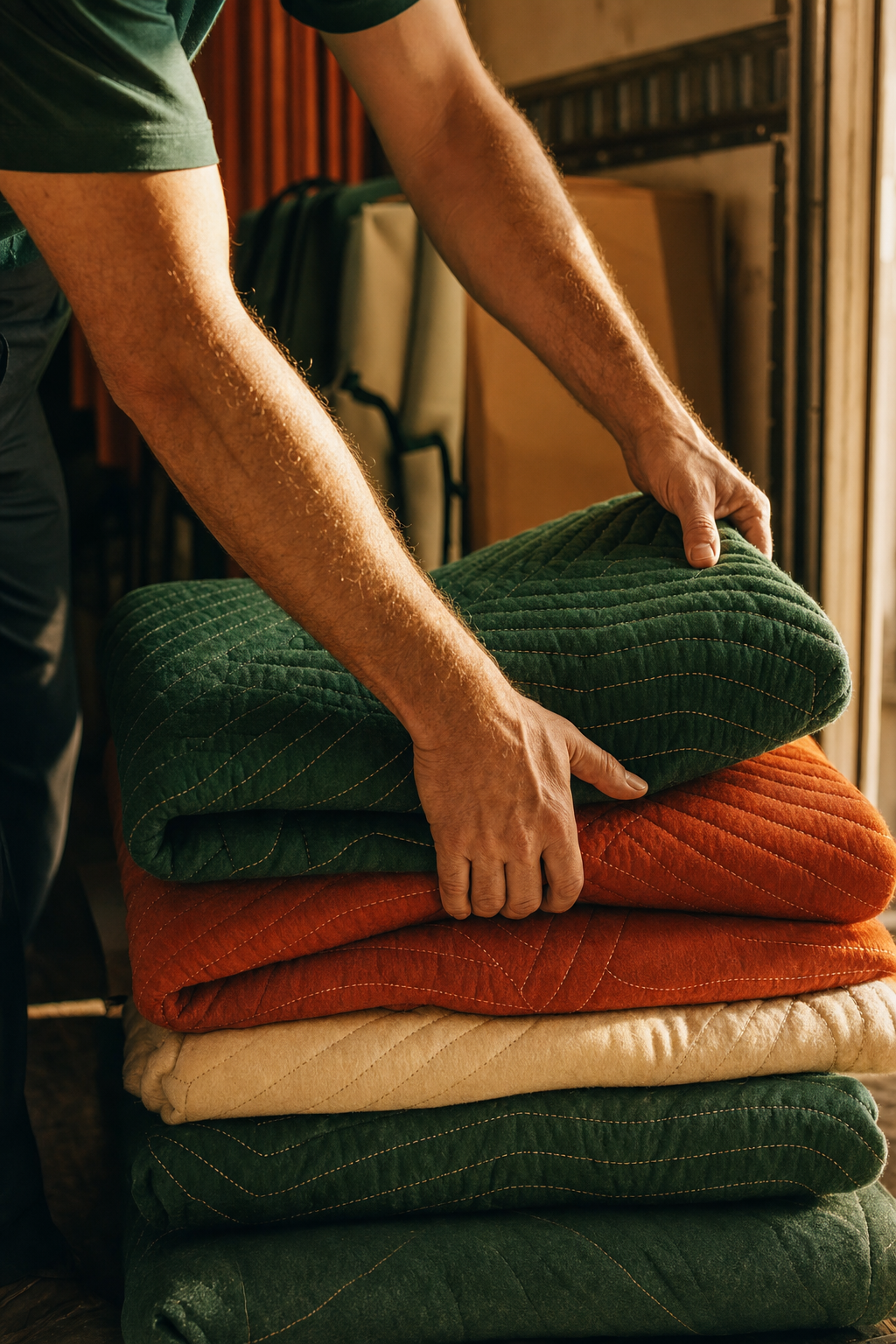
Invest in heavy duty small boxes for dense items like books and records to prevent the bottom from bowing. For the kitchen, specialty dish barrels are non-negotiable; their double-wall construction provides the necessary crush resistance for fragile glassware. To secure these containers, use high-quality packing tape and apply the H-tape method. This involves sealing the center seam and then taping across both perpendicular end seams. This technique creates a reinforced frame that maintains the box’s shape under weight. While DIY guides often suggest using clothing for padding, professional moving services rely on moving blankets for a reason. Textiles like t-shirts compress over time, allowing items to shift inside the box. Moving blankets provide consistent, dense cushioning that stays in place throughout the journey.
How to Pack Moving Boxes Efficiently Room by Room
Once you have secured the right supplies, applying room-specific logic ensures that every cubic inch of the box is utilized safely and logically. This level of organization is what separates a chaotic move from a streamlined transition handled by professional moving services.
In the kitchen, the most common mistake is stacking plates horizontally. Instead, wrap each plate individually and stand them on their edges, similar to how vinyl records are stored in a crate. This vertical orientation significantly increases the structural strength of the stack; it ensures that the weight is distributed through the edges rather than the center, where ceramic is most vulnerable to pressure. For large pots, use the Russian doll technique by nesting smaller jars or non-perishables inside them. This maximizes space and provides internal stability for larger containers.
For the bedroom, hanging clothes present two distinct options depending on your budget and space requirements. Wardrobe boxes are the gold standard for protecting suits or delicate dresses from wrinkles and dust. However, if you are executing a quick local move and need to save space, the trash bag method is a practical alternative. Group about ten hangers together, pull a large drawstring bag up from the bottom of the clothes, and tie the handles around the hanger hooks. This keeps the set together and allows the bundle to be laid flat atop other boxes in the truck without losing the organization of your closet.
Living room electronics require a documentation strategy to avoid headaches during reassembly. Before unplugging the television or sound system, take a clear photo of the cable configurations. Place all mounting screws and remote batteries into a small, labeled plastic bag and tape it directly to the back of the device. By keeping the hardware physically attached to the unit, you eliminate the risk of losing critical components in a sea of miscellaneous hardware. Mastering these specific tactics for how to pack for a move ensures that when your crew arrives, every item is modular, protected, and ready for efficient loading.
Protecting Breakables and Valuables Like a Pro

Mastering room-specific tactics creates the foundation for a successful load, but delicate items require specialized engineering. When considering how to pack breakables, the most effective professional technique is the box-within-a-box method. Place your fragile item in a small, well-cushioned box, then place that box inside a larger container filled with at least two inches of packing peanuts or crumpled paper on all sides. This double layer creates a suspension system that absorbs the shocks of city potholes or sudden stops during transit.
Valuables require a different strategy entirely. While professional moving services handle inventory with extreme care, high-value items like heirloom jewelry, original birth certificates, and closing documents should never enter the moving truck. These items are difficult to replace and should remain in your personal vehicle or an Essentials Bag that stays with you throughout the day.
Your Essentials Bag serves as a survival kit for the first 24 hours in your new home. Ensure it contains:
Phone chargers and power banks
A box cutter for immediate unpacking
Basic toiletries and a change of clothes
Prescription medications
Important keys and lease agreements
Keeping these items separate ensures you are not digging through a hundred boxes at midnight just to find a toothbrush or a charger. This level of preparation is a critical part of how to pack for a move that remains organized from start to finish.
Chicago Specific Packing Tips for High Rises and Narrow Streets
Moving in Chicago presents unique logistical challenges that require specific adaptations to your packing strategy. In high-rise buildings with strict freight elevator reservations, time is your most valuable commodity. Label every box by both room and priority. This allows professional moving services to stage critical items, such as bed frames and kitchen essentials, near the elevator doors for immediate unloading. This system prevents the crew from burying your first-night needs at the back of a deep floor plan, saving billable minutes during the transition.
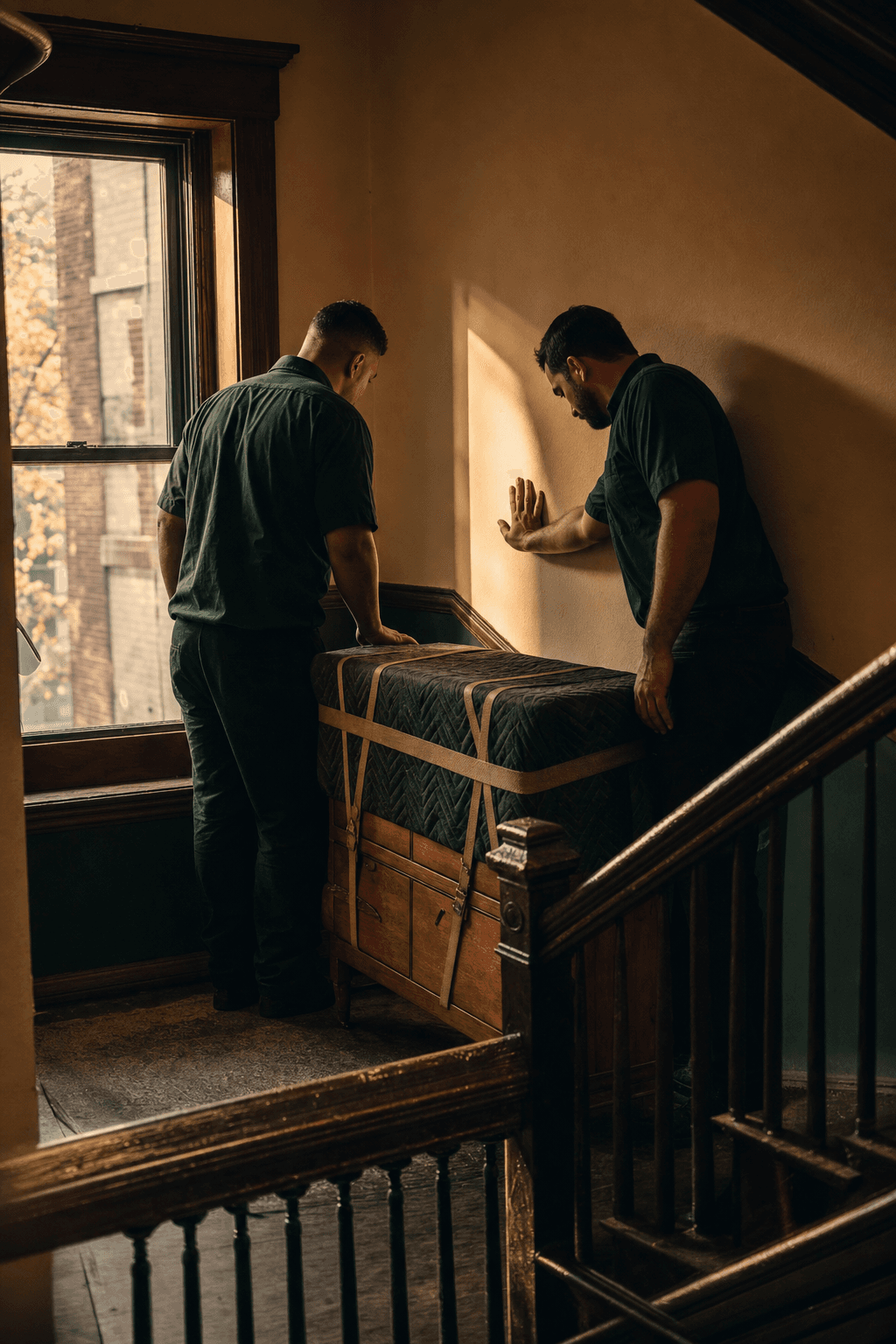
Residents in vintage neighborhoods like Lakeview or Lincoln Park must account for narrow corridors and tight stairwells. Avoid overpacking large boxes with light items that create unnecessary bulk. Instead, utilize medium boxes that are easier to maneuver around sharp corners and through the slim door frames common in historic buildings. Given the city’s unpredictable climate, assume it will rain or snow. Seal all seams with high-quality tape and consider wrapping the bottom tier of boxes in stretch film. This weatherproofing prevents cardboard from absorbing moisture on slushy sidewalks or during the transit between the loading dock and the truck.