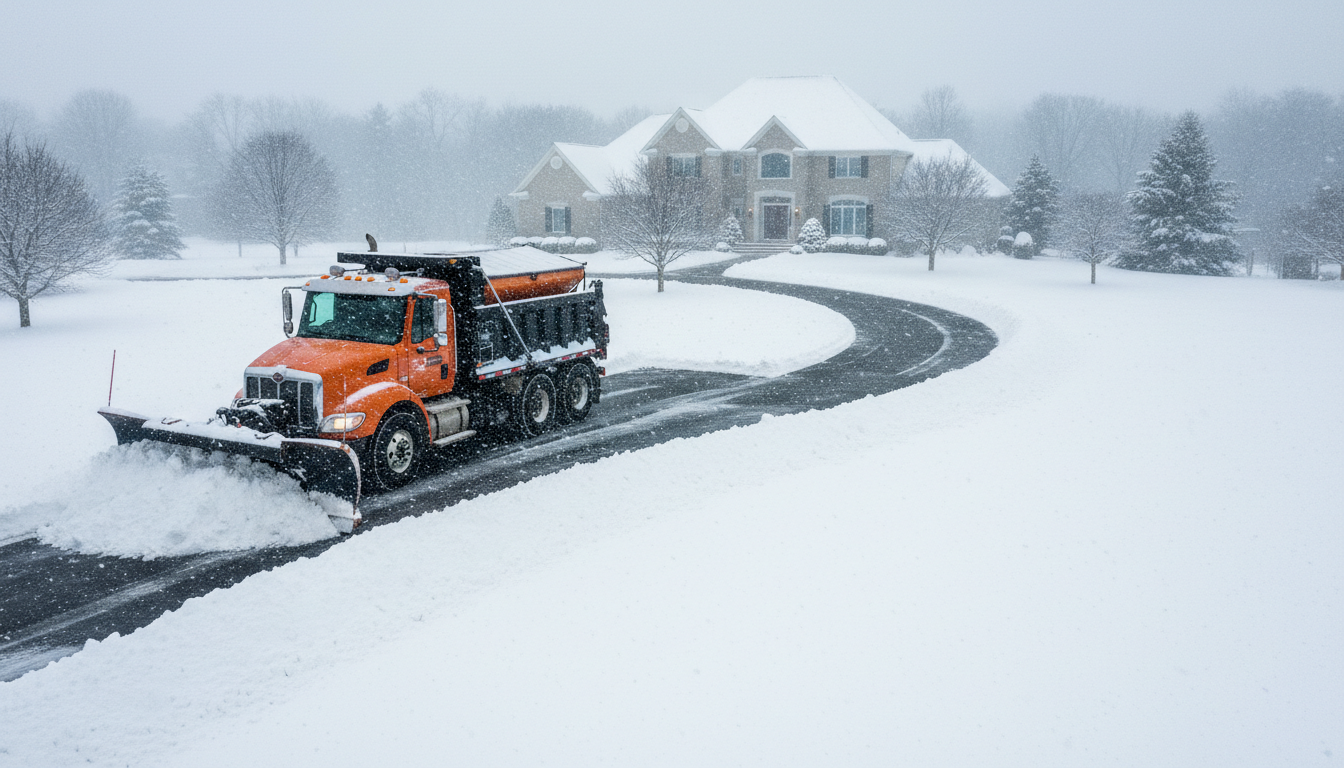
Moving in winter Chicago can reduce your total costs by up to 30 percent because moving companies typically offer lower off-season rates. To ensure safety during the cold weather, you should clear all snow and ice from walkways, salt paths thoroughly to prevent slips, and schedule your move during daylight hours to avoid refreezing.
Staring at a mountain of boxes while a lake effect snow warning flashes on your phone is enough to make any Chicagoan question their timing. Moving in the Windy City is rarely a simple task; however, doing so in sub-zero temperatures adds layers of logistical complexity that require more than just a heavy coat. While the winter off-season offers significant financial advantages and greater mover availability, the physical risks to your belongings and your safety increase when ice and slush enter the equation. Precision planning is the only way to turn a potentially chaotic day into a streamlined success. In this guide, we will break down the essential strategies for navigating the local winter landscape. You will learn how to manage snow route parking restrictions, protect fragile items from freezing, and coordinate with professional crews to ensure your transition remains efficient despite the elements.
Why Winter is the Cheapest Time to Move in Chicago
While sub-zero temperatures and lake effect snow might seem like a deterrent, moving in winter Chicago offers substantial financial and logistical advantages that are impossible to find during the peak summer season. The period between November and March is widely considered the off-season for the relocation industry, which directly translates to significant savings for the consumer. On average, Chicago residents can expect a 20 to 30 percent reduction in moving rates compared to the frantic demand seen in June and July.
Statistically, January and February represent the most affordable window for both moving services and apartment rentals. Because fewer people are willing to brave the cold, property managers and professional, affordable movers have more availability, leading to more competitive pricing and flexible scheduling. This lack of competition is particularly beneficial if you are relocating to a high-rise in the Loop or River North. During the summer, securing an elevator reservation for a move-in can require booking months in advance, often leaving you with inconvenient time slots. In the winter, these buildings typically have wide-open calendars, allowing you to choose the exact time that works for your schedule.
Beyond the base price, the off-season allows for a more personalized experience. When you utilize full-service moving services during the winter, you are often working with the most experienced, year-round crew members who have mastered the art of navigating icy conditions. When choosing the right moving company, prioritizing these winter months ensures you receive premium service at the lowest possible price point.
Navigating Chicago Snow and Ice on Moving Day

Safety becomes the primary focus once you have secured your winter date. Moving in winter Chicago requires a meticulous approach to clearing the path between your home and the moving truck. While most people remember to shovel their front porch or driveway, many overlook the city sidewalks and the parkway. If your building uses an alley for loading, especially in densely packed neighborhoods like Lakeview or Lincoln Park, you may face narrow passages that remain unplowed long after the main streets are cleared. It is essential to clear these paths early in the morning to prevent snow from being compacted into ice by foot traffic.
When treating surfaces, opt for pet-safe ice melt. Many Chicago neighborhoods are high-traffic areas for pets, and standard rock salt can be corrosive to paws and local landscaping. A clear, salted path significantly reduces the risk of slips for both you and your crew.
Experienced crews from full-service moving services arrive prepared for these exact conditions. Professional movers do not just rely on standard equipment; they utilize heavy-duty dollies with pneumatic tires designed to navigate uneven, slushy surfaces without losing momentum. Furthermore, they deploy non-slip floor runners throughout the interior of your home. These runners serve a dual purpose: they provide stable traction for the movers and protect your hardwood or carpet from the abrasive mixture of salt, slush, and moisture that inevitably tracks inside during a winter relocation. This level of preparation ensures that the physical challenges of the Chicago climate do not compromise the safety of your belongings or the people moving them.
Chicago Parking Permits and Snow Routes during a Move
Navigating the logistics of moving in winter Chicago requires a firm grasp of the city's seasonal parking ordinances, which are strictly enforced regardless of the temperature. The most critical regulation is the Overnight Winter Parking Ban, effective from December 1 through April 1. This ban applies to 500 miles of Chicago’s main arterial streets between 3:00 am and 7:00 am. If your new or old residence sits on one of these routes, you cannot rely on overnight staging for a truck. Furthermore, a second 2 inch snow ban can be triggered on an additional 500 miles of streets at any time, potentially resulting in immediate towing if the truck blocks a plow route.
Beyond official bans, physical street capacity changes drastically after a storm. Snow piles left by city plows can reduce the usable width of a street or the length of a parking zone by 50 percent or more. This is particularly challenging for the larger vehicles used by professional, affordable movers. To mitigate this, walk the block personally the night before. Look closely for No Parking signs that may be obscured by heavy snow drifts or ice accumulation. It is also wise to coordinate with neighbors in advance. Ask them to shift their vehicles slightly to create a larger gap, as the space required for a loading ramp and crew access is significantly greater than a standard car length during the winter months.
What Do Professional Movers Do When it Snows?

A common concern when moving in winter Chicago is how the weather dictates the schedule. At Velox Movers, we operate under the principle that the move proceeds unless conditions become hazardous. We monitor the National Weather Service for blizzard warnings or extreme wind chill advisories that could jeopardize the safety of our crew or your belongings. If it is simply a typical Chicago snowfall, our teams are trained to adapt their workflow to the environment rather than delaying your transition.
Professional protocols during a snow event focus heavily on moisture control and surface protection. We double-wrap all furniture in heavy-duty plastic stretch wrap before it leaves your home. This barrier prevents snow and humidity from penetrating fabric or wood finishes during the transition to the truck. Inside the vehicle, we utilize thick, dry moving blankets to provide a final layer of insulation and cushioning.
To safeguard your flooring, we deploy high-grade protection throughout the loading paths. We use neoprene runners and specialized floor shields to capture slush and road salt before they can reach your hardwood or carpet. By maintaining a strict "dry zone" within the residence, our full-service moving services ensure that the interior of your new home remains pristine. Relying on professional, affordable movers means these technical safeguards are standard, providing peace of mind even when the forecast is less than ideal.
How to Pack for Sub-Zero Temperatures

While professional protocols safeguard the exterior of your belongings, packing for sub-zero temperatures requires a specialized strategy for the items inside the boxes. Moving in winter Chicago means exposing your possessions to extreme temperature swings that can cause structural or electrical failure. Electronics like LED TVs and computer monitors are particularly vulnerable; the cold makes plastic brittle, while the real danger is condensation. Bringing a frozen device into a warm apartment creates internal moisture that can short-circuit delicate circuitry. Always allow electronics to acclimate to room temperature for at least 24 hours before powering them on.
Musical instruments and liquids require equal caution. Wooden instruments can warp or crack as fibers contract in the dry air, while cleaning supplies, wine collections, and indoor plants can freeze and burst in a non-heated truck. To mitigate these risks, professional, affordable movers recommend a "last on, first off" loading priority. By keeping these sensitive items in a climate-controlled environment until the very end and making them the first items offloaded, you minimize their exposure to the Chicago freeze. When choosing the right moving company, look for teams that prioritize these logistics as part of their full-service moving services, ensuring your most fragile assets survive the sub-zero trek.
Winter Logistics: Managing Utilities and Interior Safety
Managing the internal environment is just as vital as protecting your cargo during the transition. You must confirm that heat and electricity are fully operational at your new residence at least 24 hours before your arrival. Moving in winter Chicago into an unheated space is a safety hazard; a warm interior is necessary to thaw frozen surfaces and allow sensitive electronics to acclimate safely.
In high-rise buildings, be particularly wary of the wind tunnel effect. When a unit door and a balcony or lobby door are open simultaneously, the pressure differential can create powerful, freezing gusts. These drafts can slam doors unexpectedly or knock over fragile items staged near the entryway. Keeping internal doors closed unless actively moving a piece of furniture through them is a simple but effective safety measure.
To keep the process running smoothly, organize your logistics around a few key comforts:
The Warm Station: Set up a designated area with hot coffee, tea, or cocoa for your family and the professional, affordable movers.
Winter Essentials Box: Pack a box containing extra hats, moisture-wicking gloves, and several heavy-duty doormats to rotate as they become saturated with slush.
Utility Verification: Double-check that all pilot lights are lit and the thermostat is functioning properly before the first box enters the home.
By handling these internal details, you allow the full-service moving services team to focus on the heavy lifting while maintaining a safe, controlled environment for everyone involved. When choosing the right moving company, these small logistical preparations ensure the crew can work at peak efficiency despite the external conditions.
Dressing for a Chicago Winter Move
While your full-service moving services team handles the heavy lifting, your personal safety depends heavily on your attire. When moving in winter chicago, avoid the temptation to wear the heaviest down parka you own. Bulky coats severely restrict your range of motion and make it difficult to navigate narrow hallways or carry smaller boxes safely. Instead, opt for a system of moisture-wicking layers. A synthetic or wool base layer keeps sweat away from your skin, while a light, wind-resistant outer shell provides warmth without the mass. This allows you to regulate your body temperature as you transition between the heated residence and the frigid outdoors.
Footwear is the most critical component for preventing accidents. Even after sidewalks are shoveled, black ice often lingers in the permanent shadows cast between tall Chicago buildings. Wear boots with deep, high-traction rubber soles rather than smooth-bottomed sneakers or fashion boots. Selecting a pair with waterproof materials and ankle support further reduces the risk of injury on uneven, slushy terrain. By dressing for mobility and traction, you can stay active and safe alongside professional, affordable movers throughout the day.